
Google’s Pixel phones have always been the thoughtful kid in the room—not the loudest, not the flashiest, but often the smartest. With the Pixel 10 series, that personality sharpens even more. At first glance, it might not seem radically different from the Pixel 9 lineup, but spend some time with it, and you begin to see Google’s evolving vision come into focus—one that finally embraces performance and premium hardware, while doubling down on what made Pixels so special in the first place.
Pixel 10 vs Pixel 9: What’s Actually New?
Let’s be honest: the Pixel 9 wasn’t a bad phone, but it was very “safe.” The Pixel 10 shakes off that restraint.
1. The Switch to Snapdragon
The biggest shift? Google is finally ditching its custom Tensor chip for Qualcomm’s Snapdragon 8 Gen 4. This is a massive deal. Tensor was ambitious—built in-house, tailored for AI—but it often lagged behind the competition in raw horsepower, thermal efficiency, and battery life.
By jumping to Snapdragon, the Pixel 10 instantly closes the gap with Samsung and OnePlus in performance. Expect smoother gaming, faster app loading, and much cooler thermals under pressure. Early tests suggest that even AI performance doesn’t take a hit—in fact, Qualcomm’s latest silicon may be even better optimized for on-device AI.
2. Subtle but Smart Design Tweaks
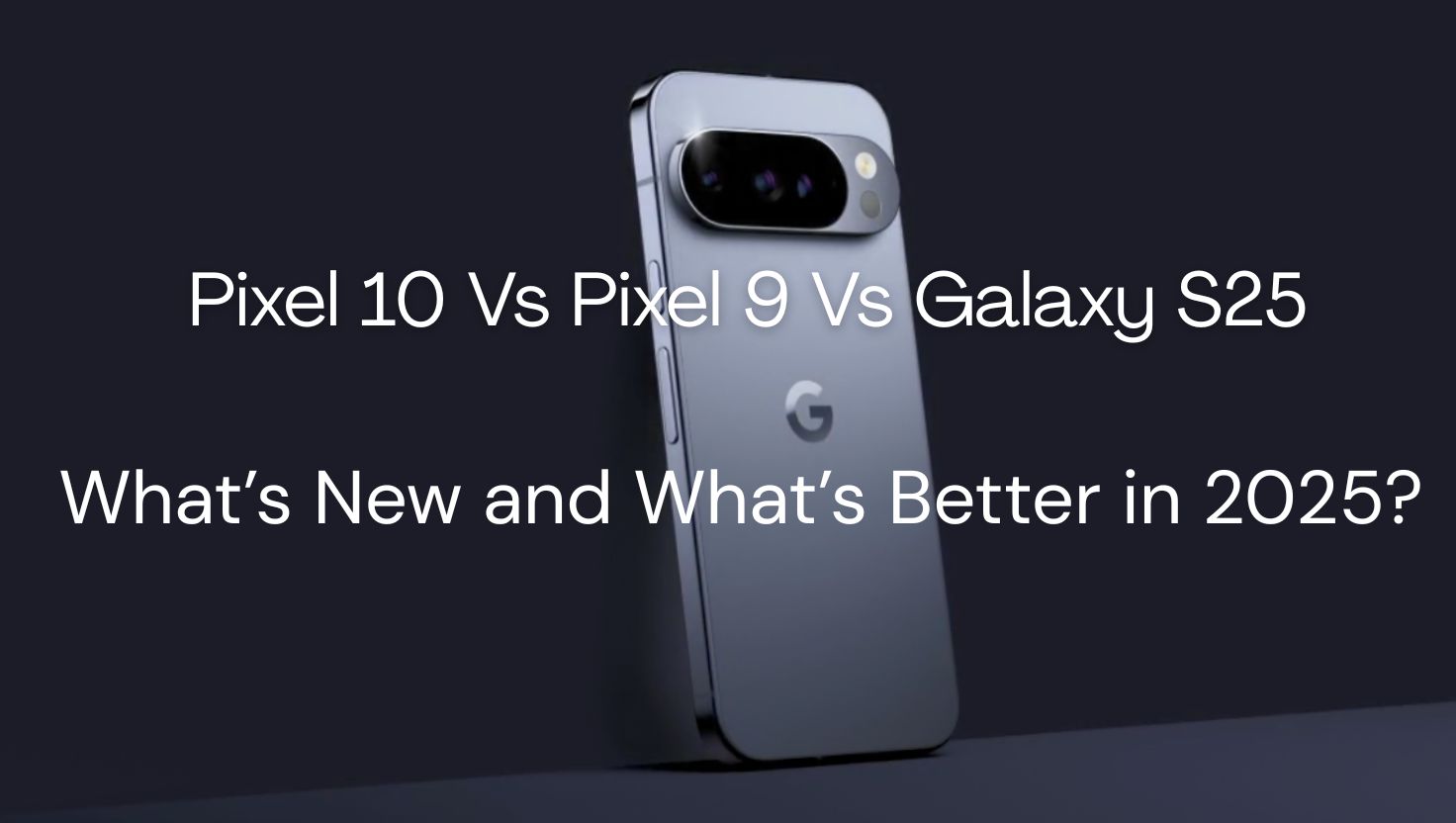
Pixel 10 still looks like a Pixel—but sleeker. The camera bar is more recessed and better integrated into the frame. Bezels are thinner, especially on the Pixel 10 Pro, and Google is experimenting with a satin matte glass finish that avoids both fingerprints and slipperiness. Small change, big impact.
The new haptic feedback engine is sharper and more nuanced, something you’ll feel the moment you type or scroll. It’s these tiny touches that show Google is no longer just designing a good camera phone—it’s now building a premium device from top to bottom.
3. Battery and Charging Improvements
Battery life has always been a Pixel sore spot. Not anymore. The switch to Snapdragon pays dividends here too. Early users report 1–2 hours of additional screen-on time compared to the Pixel 9, and wireless charging speeds are up to 15W on all models. Finally.
4. AI, Smarter Than Ever
Circle to Search? Still here. Magic Eraser? More seamless than ever. But now, Google’s on-device Gemini Nano model feels better integrated across the OS. The new AI Recorder can summarize meetings in real-time. Translate Live lets you speak in one language and have your voice translated in another—live, over a call. And AI Wallpaper gets a new “Memory” mode that creates backgrounds using your photo history and prompts. Creepy? Maybe. Cool? Definitely.
Pixel 10 vs Samsung Galaxy S25: Different Philosophies
Here’s where it gets interesting. The Pixel 10 and Galaxy S25 are both Android flagships, but they could not be more different in spirit.
Samsung wants to be everything: power, glitz, camera hardware dominance, folding experiments, even ecosystem control. Google wants to be… useful. Focused. Quietly brilliant.
1. Design
The Pixel 10 is understated—clean lines, neutral tones, matte finishes. The Galaxy S25 is polished, flashy, sometimes overdesigned. If you want something that doesn’t scream “flagship” at every angle, the Pixel is your vibe.
2. Software
Samsung’s One UI is packed with features. It’s a buffet. But it can feel overwhelming, bloated even. Pixel UI (or just “Android 15,” depending on how you see it) is minimal, fluid, and lets Google’s AI do the heavy lifting. No duplicate apps. No weird UI inconsistencies.
It’s also worth noting that Google is now promising 7 years of OS and security updates—matching Apple and beating Samsung.
3. Camera
Samsung still wins on hardware—larger sensors, longer zooms, better low-light flexibility. But Google’s computational photography is still the benchmark for natural, balanced images. With better image pipelines thanks to Snapdragon, the Pixel 10’s camera performance should now match its software prowess.
For most users, unless you’re a pixel-peeper or shoot a lot of zoom-heavy photos, the Pixel 10 is arguably the better everyday shooter.
4. Ecosystem
Samsung has a tight ecosystem—Galaxy Buds, Galaxy Watch, Galaxy Tab, SmartThings. Google doesn’t compete here yet. Sure, there’s the Pixel Watch and Buds, but they feel like sidekicks, not essentials. That said, if you’re deep into Google services (Gmail, Photos, Calendar, etc.), the Pixel feels like the most seamless extension of that lifestyle.
So… Who Is the Pixel 10 Really For?
This phone is for people who want something elegant, fast, and actually intelligent. The Pixel 10 doesn’t chase gimmicks or try to outshine everyone. It just works—and now, it works faster, lasts longer, and looks better while doing it.
If you’ve ever been tempted by a Pixel but hesitated due to performance or battery life—this is your year.
If you’re bored of Samsung’s formula or exhausted by iOS—this is your alternative.
And if you just want a phone that feels like it’s helping you, not nagging you—the Pixel 10 might be your next daily driver.
Bottom line? The Pixel 10 series doesn’t reinvent the wheel—it just makes it roll smoother, quieter, and smarter than ever before.