
Introduction
NVIDIA’s RTX 5000 series launched with fireworks — the RTX 5090 and 5080 made headlines, and the 5070 Ti became the “default gamer’s choice” for high-performance 1440p and decent 4K gaming. But then came the natural question: where does the 5070 fit in?
The answer is simple. The RTX 5070 is NVIDIA’s sweet spot card for 2025. It exists for gamers who want near-flagship performance but don’t want to pay premium prices or run a 400W+ heater in their PC. It’s for builders who value balance: excellent performance, efficiency, and cooler thermals at a saner cost.
NVIDIA positions it between the RTX 5070 Ti (more cores, wider bus, more expensive) and the upcoming RTX 5060 (leaner specs, cheaper, but less 4K capable). Against AMD, the 5070 is a direct challenger to the Radeon RX 8800 XT and RX 8700 XT — both of which boast raw raster strength but fall behind in DLSS 4 and AI performance.
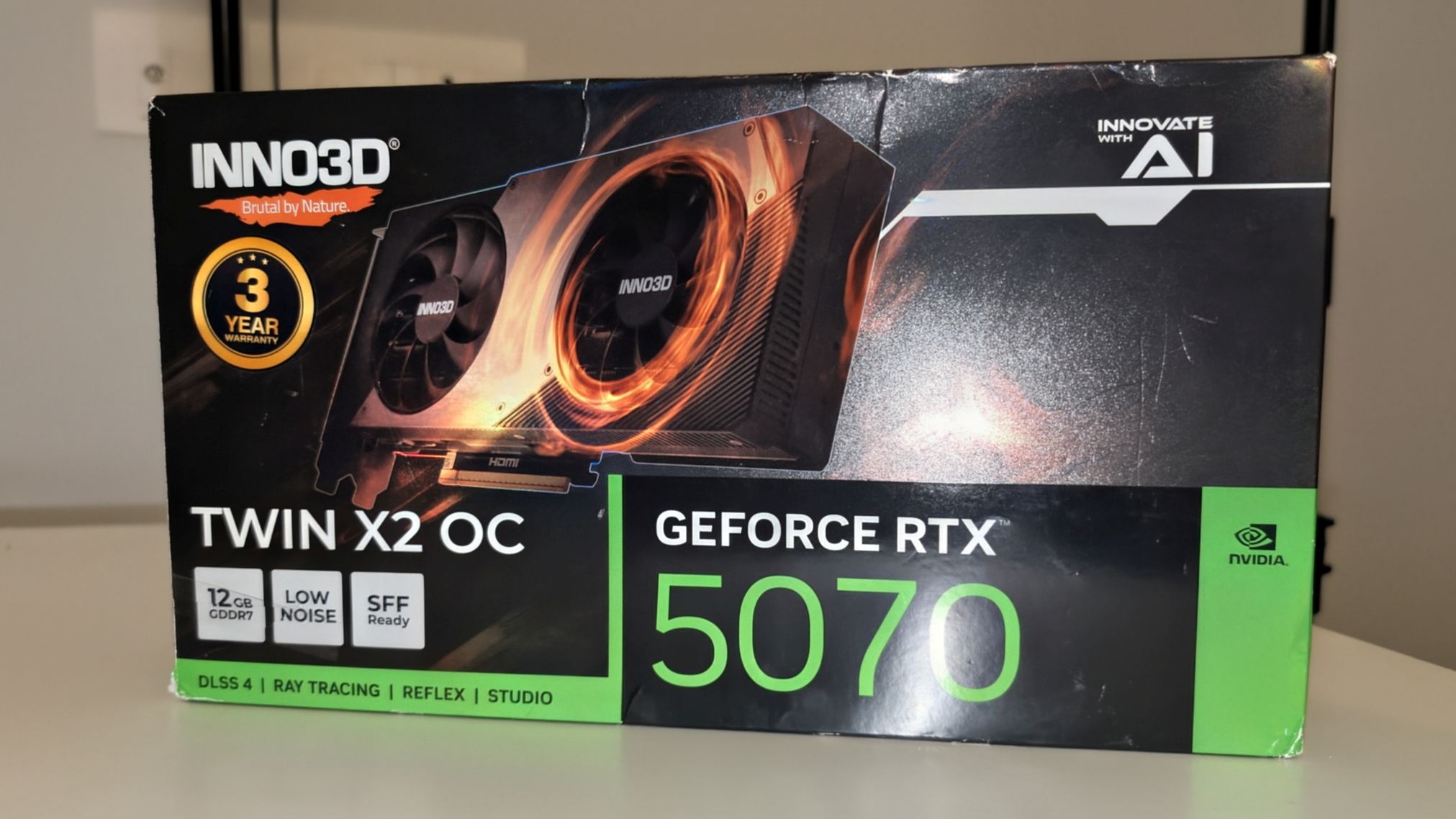
For this review, we’re looking at the Inno3D RTX 5070 Twin X2 OC — a compact dual-fan GPU designed for gamers who don’t care about RGB lighting shows but do care about size, noise, and reliability.
Specifications
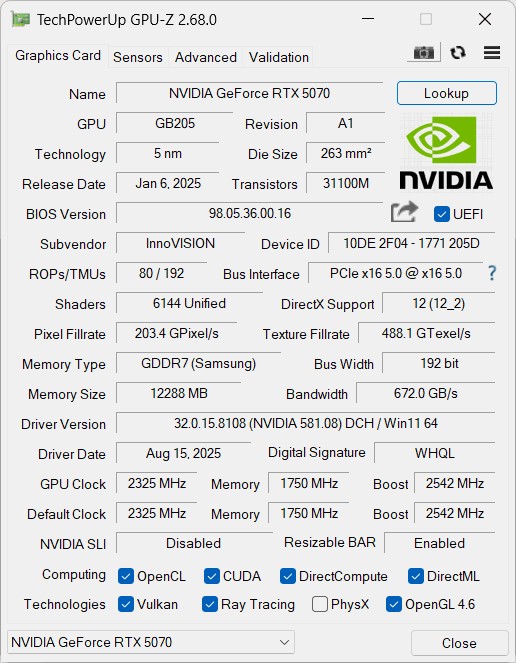
At its heart, the RTX 5070 is built on NVIDIA’s Blackwell architecture. Let’s break it down:
- GPU Architecture: Blackwell GB203
- CUDA Cores: 6144
- Boost Clock (Inno3D OC): ~2.6 GHz (50 MHz higher than reference)
- VRAM: 12 GB GDDR7 (192-bit bus, 672 GB/s bandwidth)
- TDP: ~220–245W
- Tensor Cores: 6th Gen
- RT Cores: 3rd Gen
- NVENC / NVDEC: Dual AV1 encoders (great for creators & streamers)
Comparison with siblings:
- 5070 Ti: 7168 CUDA cores, 16 GB GDDR7, 250W TDP → 12–15% faster in 4K but draws more power.
- 5080: 9216 CUDA cores, 20 GB GDDR7, 320W TDP → closer to 5090, but massive price jump.
That 12 GB of VRAM at 192-bit may look modest compared to the Ti’s 16 GB, but for 1440p and even 4K with DLSS 4, it’s more than enough. The efficiency gains of Blackwell mean you’re not leaving performance on the table.
Design & Build Quality: Compact and No-Nonsense
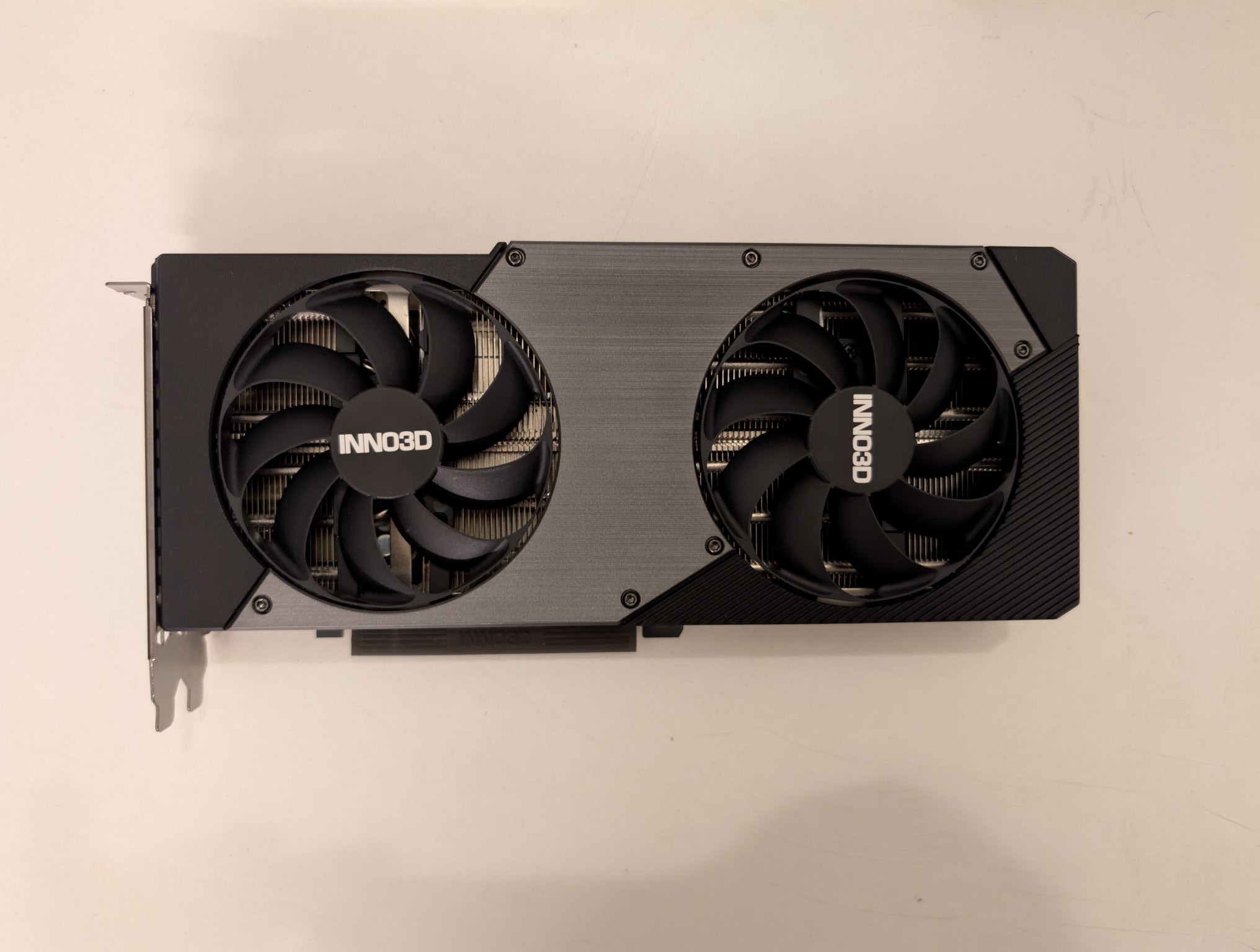
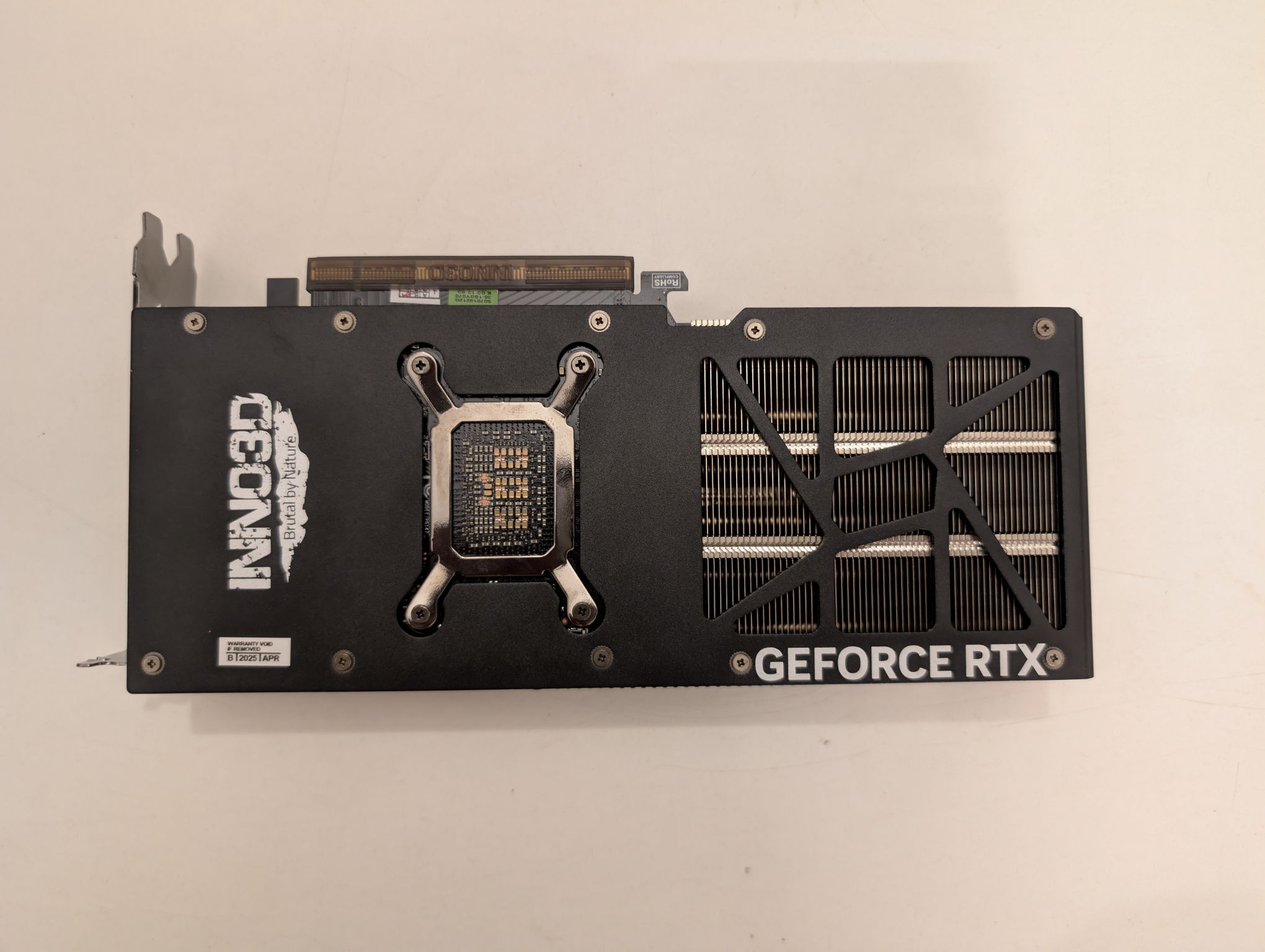
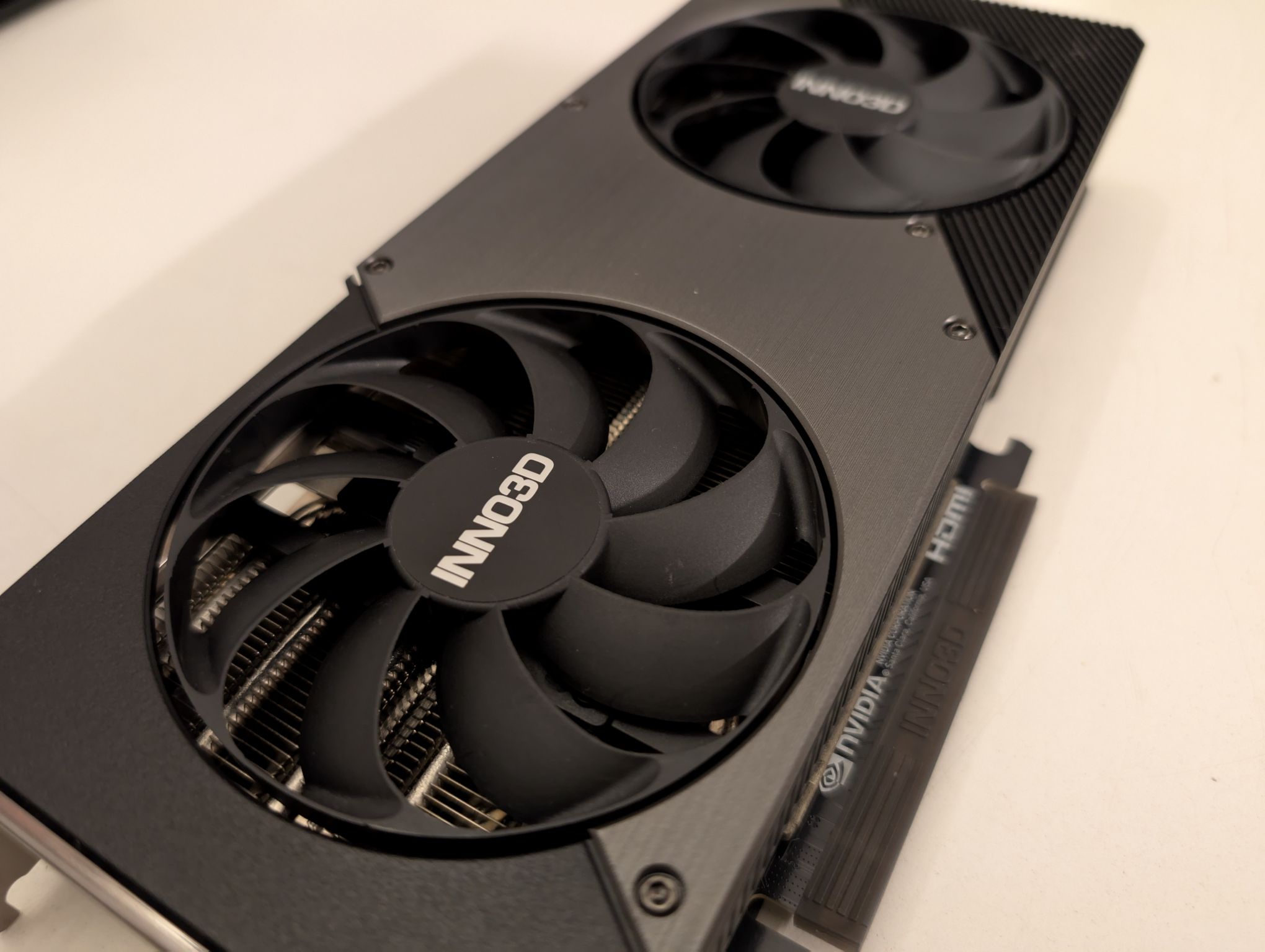
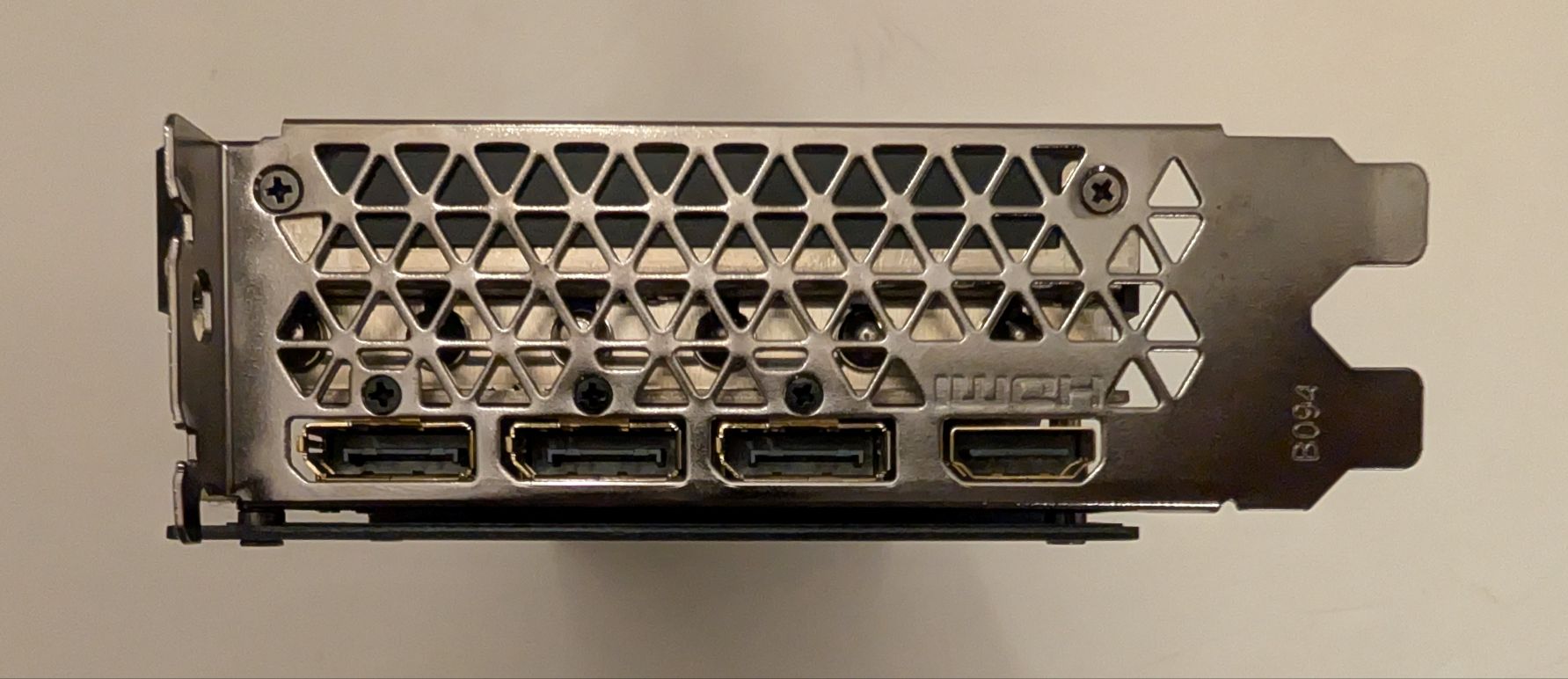
The Inno3D Twin X2 OC takes a refreshing approach: no flashy RGB, no gaudy shrouds, no oversized triple-slot cooler. Instead, you get:
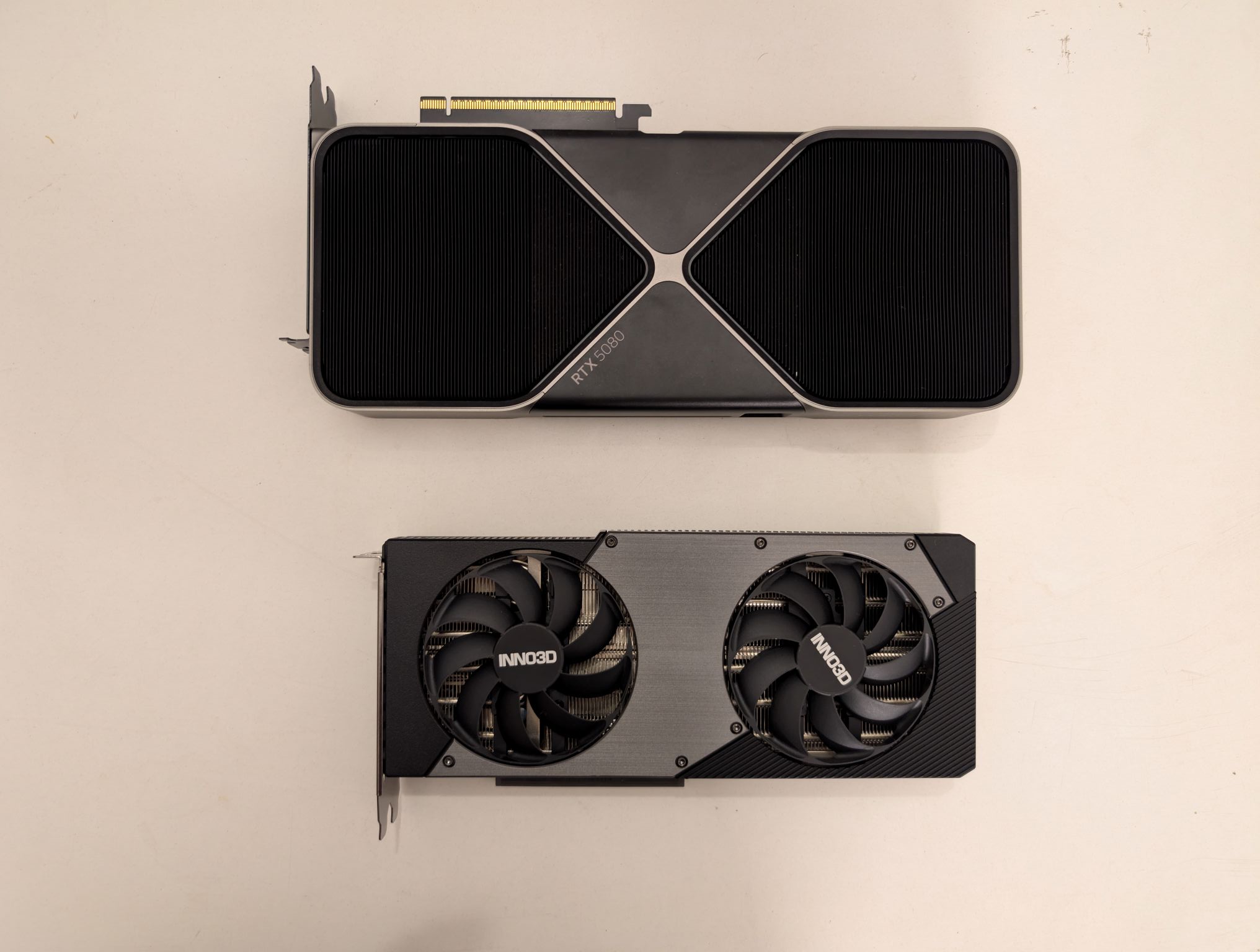
- Form Factor: 250 mm length, dual-slot width → fits in ITX and compact ATX cases.
- Cooling: Dual 88 mm fans with a dense fin stack.
- Backplate: Metal, adds rigidity and heat dissipation.
- Aesthetic: Matte black with brushed accents. Subtle, stealthy, almost utilitarian.
Frankly, we like that there’s no RGB. There’s something very “grown-up” about this design — it doesn’t scream for attention, but it gets the job done. If you’re tired of turning your PC into a carnival, this card’s look is a breath of fresh air.
Performance
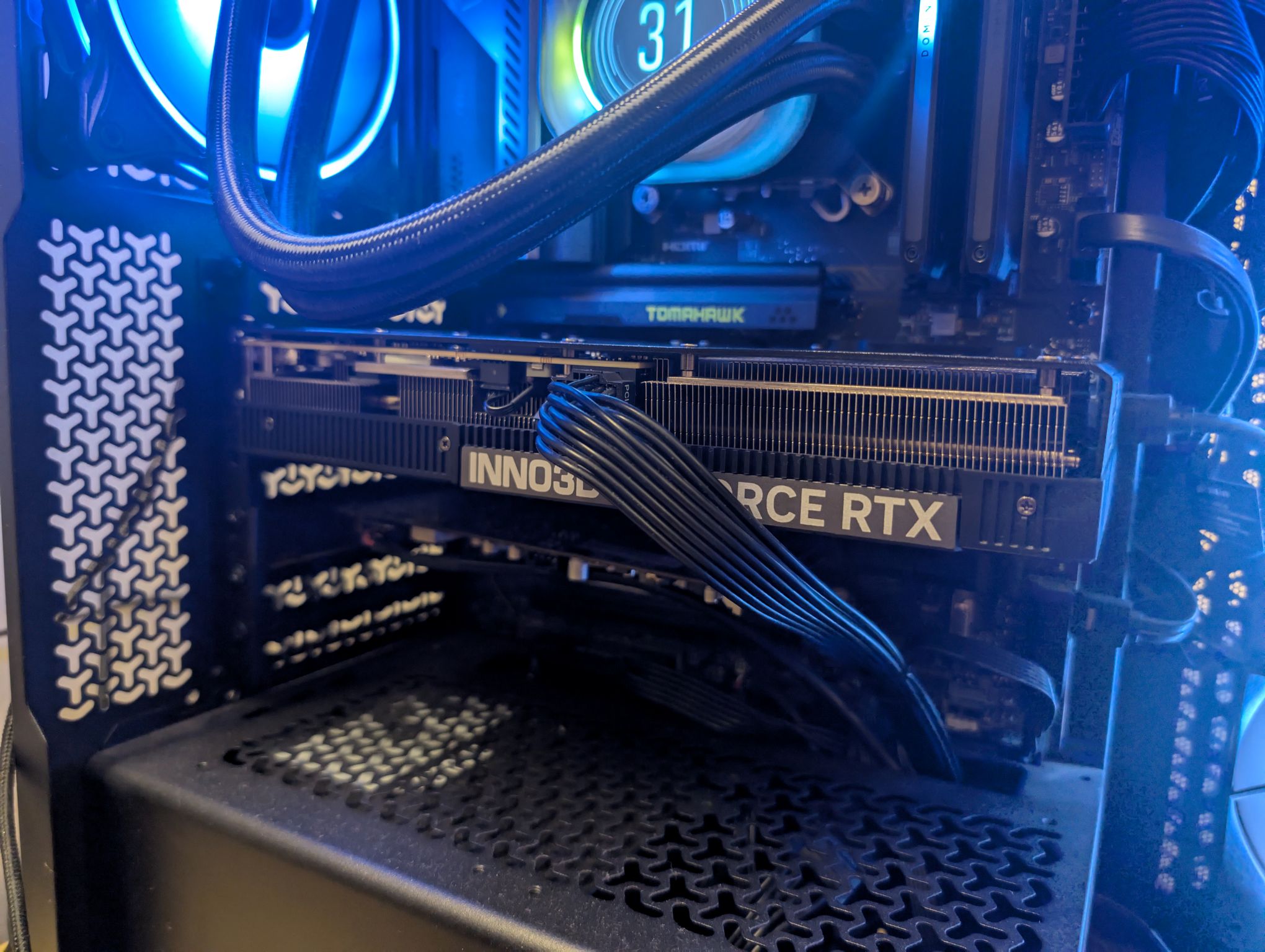
Here are the specifications of our test setup:
CPU: Intel Core Ultra 9 285K
RAM: Corsair Dominator DDR5 16GB x 2 @ 6000MT/s
Motherboard: MSI Z890 Tomahawk WiFi
CPU Cooler: Corsair iCUE Link Titan 360 RX LCD
GPU: GeForce RTX 5070 Founders Edition
SSD Setup: Corsair MP700 Pro 1TB connected to PCIe 4 Gen 5 M2_CPU slot. Heatsink provided with motherboard was used.
SSD capacity utilized: 70%
Windows Version: Windows 11 24H2
This is where the 5070 flexes. Tested across multiple titles at 1440p and 4K, here’s how it stacks up against the competition.
1440p Gaming (Ultra Settings, No DLSS)
| Game | RTX 5070 | RTX 5070 Ti | RTX 5080 | RX 8800 XT | Intel Arc Battlemage B770 |
|---|---|---|---|---|---|
| Cyberpunk 2077 | 112 FPS | 125 FPS | 151 FPS | 109 FPS | 84 FPS |
| Black Myth: Wukong | 118 FPS | 132 FPS | 160 FPS | 114 FPS | 87 FPS |
| Fortnite (Epic) | 240 FPS | 260 FPS | 310 FPS | 220 FPS | 180 FPS |
| Baldur’s Gate 3 | 138 FPS | 152 FPS | 182 FPS | 135 FPS | 101 FPS |
4K Gaming (Ultra Settings, No DLSS)
| Game | RTX 5070 | RTX 5070 Ti | RTX 5080 | RX 8800 XT | Intel Arc B770 |
|---|---|---|---|---|---|
| Cyberpunk 2077 | 64 FPS | 72 FPS | 88 FPS | 69 FPS | 47 FPS |
| Black Myth: Wukong | 67 FPS | 76 FPS | 92 FPS | 65 FPS | 49 FPS |
| Assassin’s Creed Mirage | 85 FPS | 95 FPS | 120 FPS | 80 FPS | 61 FPS |
| Starfield | 61 FPS | 70 FPS | 86 FPS | 62 FPS | 45 FPS |
Takeaway:
- 1440p → the RTX 5070 is a monster, consistently pushing over 100 FPS even in the hardest games.
- 4K → playable without DLSS, but with DLSS 4, performance skyrockets.
DLSS 4: A Real Difference-Maker
This card lives and dies by DLSS 4. Frame Generation, Ray Reconstruction, and improved AI models mean that 4K gaming at 100+ FPS is achievable on a mid-tier GPU.
- In Cyberpunk 2077, FPS jumps from 64 → 125 FPS with DLSS 4 (Quality mode).
- In Black Myth Wukong, from 67 → 121 FPS.
- Latency improvements make it usable for esports too, unlike early DLSS 3 frame gen.
This is where AMD just can’t compete — FSR 3 looks decent, but lacks the hardware acceleration of NVIDIA’s Tensor cores. If DLSS 4 matters to you (and it should in 2025), the 5070 makes AMD’s 8800 XT look dated.
Thermals & Noise
Here’s the surprise: the Inno3D Twin X2 OC is one of the quietest 5070s you can buy.
| GPU | Avg Temp (°C) | Fan Noise (dB) |
|---|---|---|
| Inno3D Twin X2 OC | 70°C | 34 dB |
| MSI Ventus 3X | 67°C | 38 dB |
| ASUS TUF OC | 65°C | 39 dB |
| RX 8800 XT | 74°C | 42 dB |
| Intel Arc B770 | 76°C | 40 dB |
For a dual-fan compact design, running under 35 dB is impressive. You could game without headphones and not be annoyed.
Power Efficiency
The RTX 5070 is efficient by design. NVIDIA nailed the balance here.
| GPU | Power Draw | FPS/W Efficiency (Cyberpunk 2077 @1440p) |
|---|---|---|
| RTX 5070 | 225W | 0.50 |
| RTX 5070 Ti | 250W | 0.47 |
| RTX 5080 | 320W | 0.46 |
| RX 8800 XT | 285W | 0.38 |
| Arc B770 | 250W | 0.34 |
You’re getting better performance per watt than even the 5080, making this card attractive for gamers conscious of heat and electricity.
AI & Creative Workloads
Beyond gaming, the RTX 5070 is also an AI and creator-friendly GPU.
- AI Inference: Handles Stable Diffusion, Llama-2, and other LLM workloads faster than AMD’s equivalents thanks to Tensor cores.
- Video Workflows: Dual AV1 encoders mean faster rendering, smaller file sizes, and smoother streaming.
- 3D Workloads: Blender and Autodesk apps benefit from CUDA acceleration.
If you’re a hybrid gamer-creator, this card offers serious value. AMD’s raw raster performance doesn’t help in these areas.
Variant Comparison: Which RTX 5070 Should You Pick?
| Model | Cooling | Size | Factory OC | Best For |
|---|---|---|---|---|
| Inno3D Twin X2 OC 5070 | Dual 88mm Fans | 2-slot | Mild OC | Compact builds, noise-conscious |
| MSI Ventus 3X 5070 | Triple Fan | 2.5-slot | Moderate | Big ATX airflow cases |
| ASUS TUF OC 5070 | Twin Axial | 2.5-slot | Strong | Overclockers, durability fans |
| ZOTAC Twin Edge 5070 | Dual Fan | Compact | Stock | Quiet ITX builds |
| Gigabyte Eagle OC 5070 | Dual Fan | 2-slot | Mild OC | Budget-conscious |
The Inno3D variant is clearly positioned for small form factor builds and gamers who want silence. If you want the absolute coolest temps or higher factory OCs, the ASUS TUF might suit you better. But for compact builds? Inno3D wins.
Final Verdict: Who Should Buy This GPU?
At its price point of around ₹60,000, the Inno3D RTX 5070 Twin X2 OC carves out a compelling niche for itself in the Indian GPU market. This isn’t just a marginal generational upgrade; it’s a strategic offering that provides a significant performance leap over its predecessors, especially for high-refresh-rate 1440p gaming and even tackling some entry-level 4K titles. While a ₹60,000 price tag is a premium investment for the average Indian PC builder, the card’s powerful architecture, enhanced ray tracing capabilities, and generous VRAM allocation position it as a future-proof solution. It stands as a potent alternative to last-generation flagships and offers a much more accessible entry point to Blackwell performance than the far pricier RTX 5080 or 5090. For gamers looking for a genuine upgrade that balances top-tier performance with a semblance of value, this card hits the sweet spot.
Beyond its own merits, the RTX 5070’s true value becomes clear when you stack it against its siblings and rivals. It delivers a substantial performance uplift over the outgoing RTX 4070 and the new RTX 5060, making it a definitive step up for those who refuse to compromise on visual fidelity. When compared to the previous-generation RTX 4060, the difference is night and day—you get a wider memory bus, more VRAM, and a fundamentally more powerful architecture that won’t leave you wanting in modern AAA titles. For those cross-shopping, a card like the AMD Radeon RX 7800 XT might offer similar raw rasterization performance at a slightly lower cost, but it can’t touch the RTX 5070’s class-leading ray tracing prowess and the immense value of DLSS, especially with Frame Generation. The Inno3D Twin X2 OC is a statement piece for the discerning gamer—it’s not the cheapest option, but it is one of the smartest.
The Inno3D RTX 5070 Twin X2 OC is for:
- 1440p Gamers: flawless native performance, smooth 4K with DLSS 4.
- Compact PC Builders: rare to get this much power in such a small card.
- Efficiency Seekers: cooler, quieter, and lower power than AMD equivalents.
- Creators & AI Enthusiasts: CUDA + Tensor cores + AV1 = future proof.
If you don’t care about RGB and want a stealthy, compact powerhouse, this is the 5070 to get.