
Introduction
The HyperX Cloud brand has been synonymous with gamers for more than a decade. It isn’t a trend-driven name; it’s a reputation built over years of real usage. At iLLGaming, we reviewed our first Cloud headset back in 2016 – the Kingston HyperX CloudX Revolver. Then came the HyperX Cloud Alpha in 2019. Those products earned their place because they delivered enthusiast-level experiences without demanding flagship pricing.
Today, HyperX is a sub-brand under HP. Leadership structures may have changed, but the Cloud identity feels consistent. The branding, the design language, and the philosophy of building enthusiast products at accessible prices remain intact. The HyperX Cloud II and HyperX Cloud III continue to dominate sales in their segments. The Cloud name has effectively become a household name among gamers.
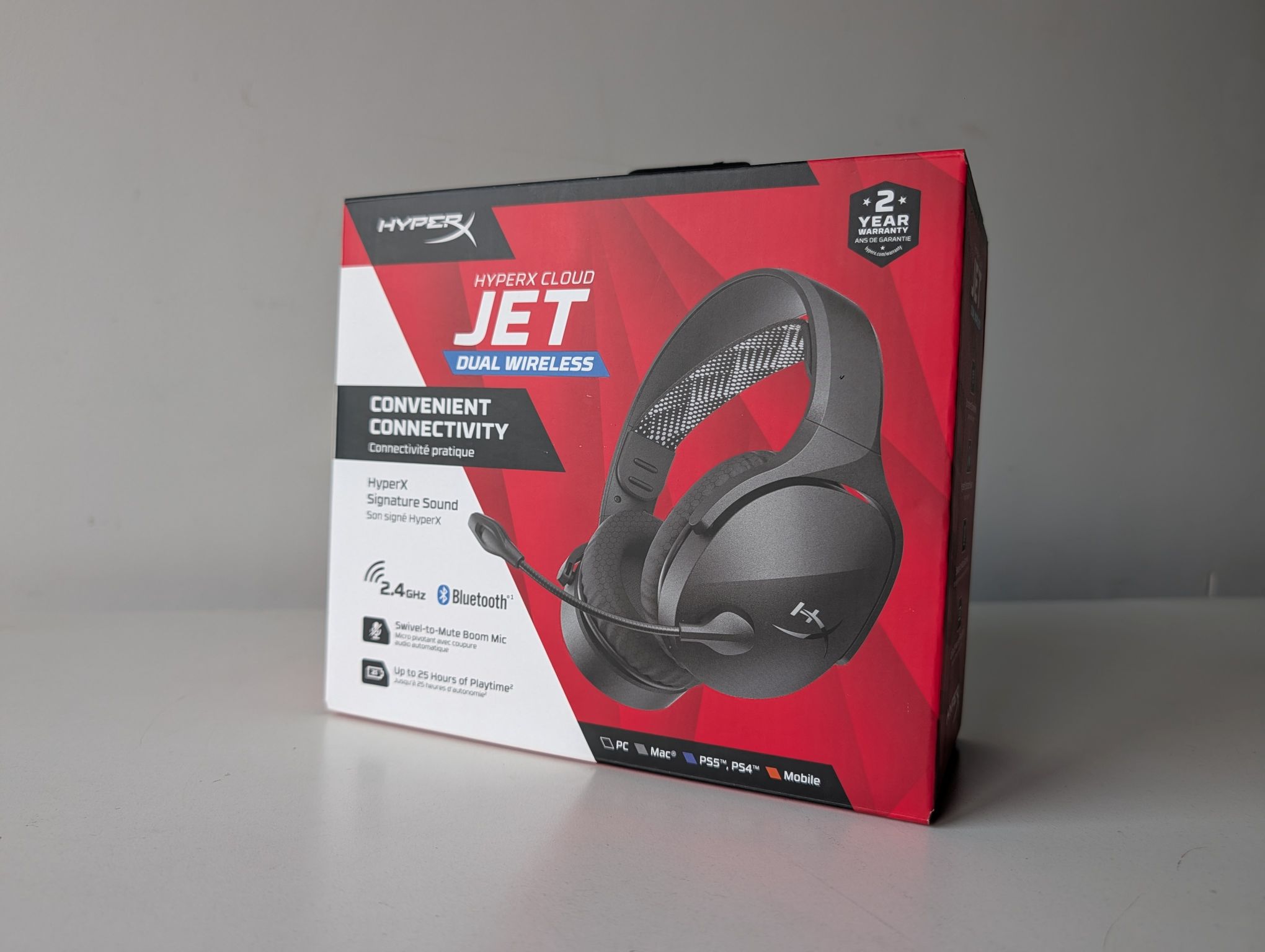
The HyperX Cloud Jet is the latest addition to this sub-brand. It sits between the flagship Cloud III and the budget Cloud Stinger 2. The positioning is clear: a lightweight alternative to the premium Cloud models, offering HyperX’s signature sound with slightly reduced padding and a more accessible price. At around ₹4,000, it costs roughly half of what you would pay for the Cloud III.
At that price, it offers dual-band wireless connectivity – Bluetooth and 2.4GHz wireless via a USB dongle – along with a built-in mic, a USB-A to USB-C charging cable of decent length, and up to 25 hours of battery life.
Dual-band connectivity at ₹4,000 already feels like a win. It opens up genuine flexibility for PC, laptop, and phone use without friction. Interestingly, the Cloud III Wireless does not feature Bluetooth. That immediately made me question where the Cloud Jet might be compromising. Build quality? Audio? Microphone? My findings surprised me.
Let’s get into it.
Design & Comfort
The unboxing experience is practical and direct. Inside the box, you get the headset with an attached non-detachable mic, a USB wireless dongle, a USB-A to USB-C cable, and a non-woven fabric carry pouch. It’s straightforward and functional, which aligns perfectly with the product’s price bracket.
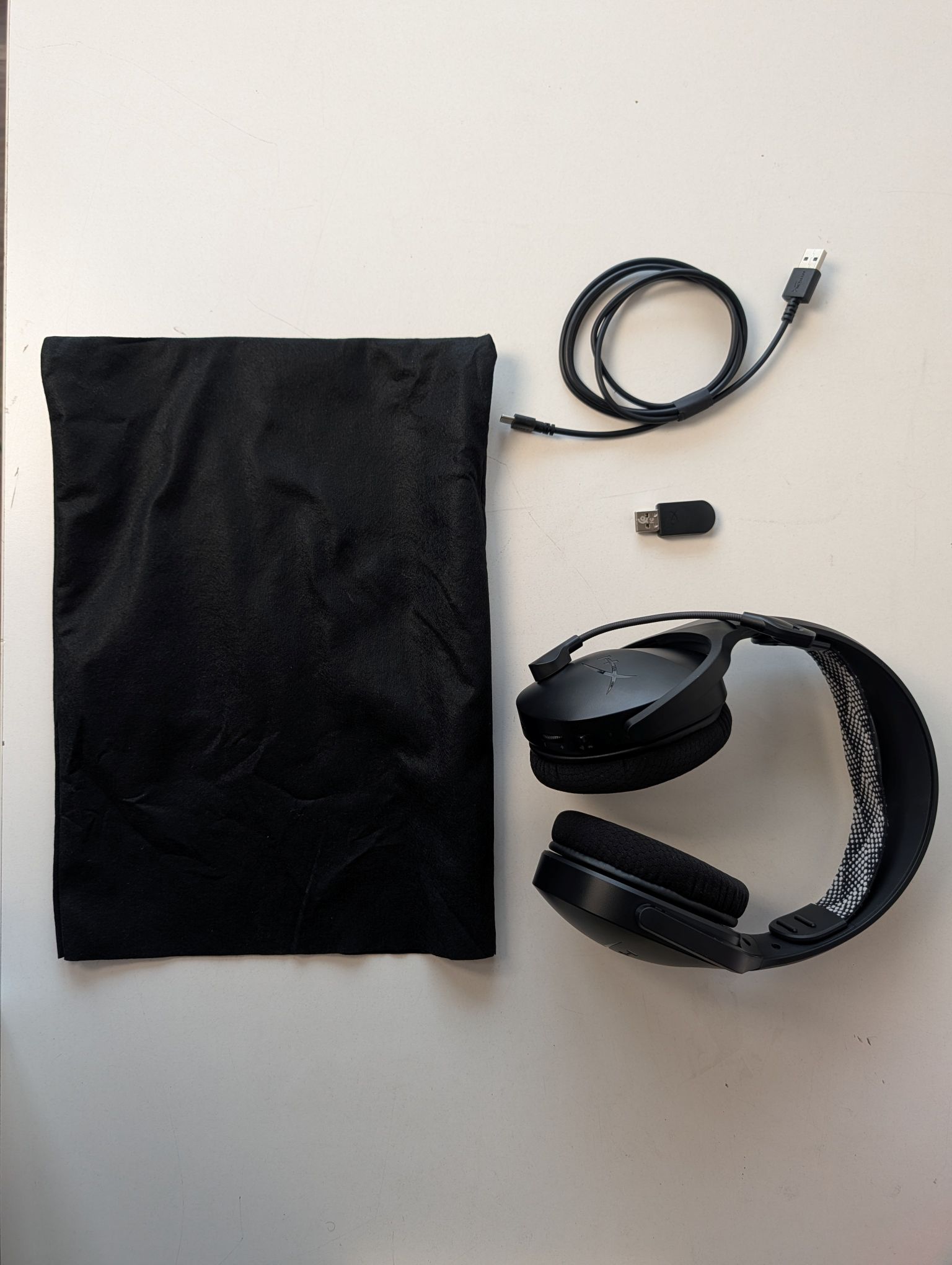
Given the features and the cost, I expected the Cloud Jet to feel like a lightweight plastic gadget. That assumption lasted about five minutes. Yes, the headset is entirely plastic. There’s no metal frame. But the construction feels solid. The plastic quality is good to the touch – smooth, dense, and reassuring. It feels like something built for daily use rather than occasional gaming. There are no flex points, no rattles, no squeaky hinges. The finishing is clean. The overall build inspires confidence.
The headband design deserves credit. The earcups are angled outward slightly, which helps the headset settle naturally on your head. There’s a suspended, stretchable strap integrated into the headband that automatically adjusts to fit. This design eliminates the need for traditional adjustable rails. It works exceptionally well.
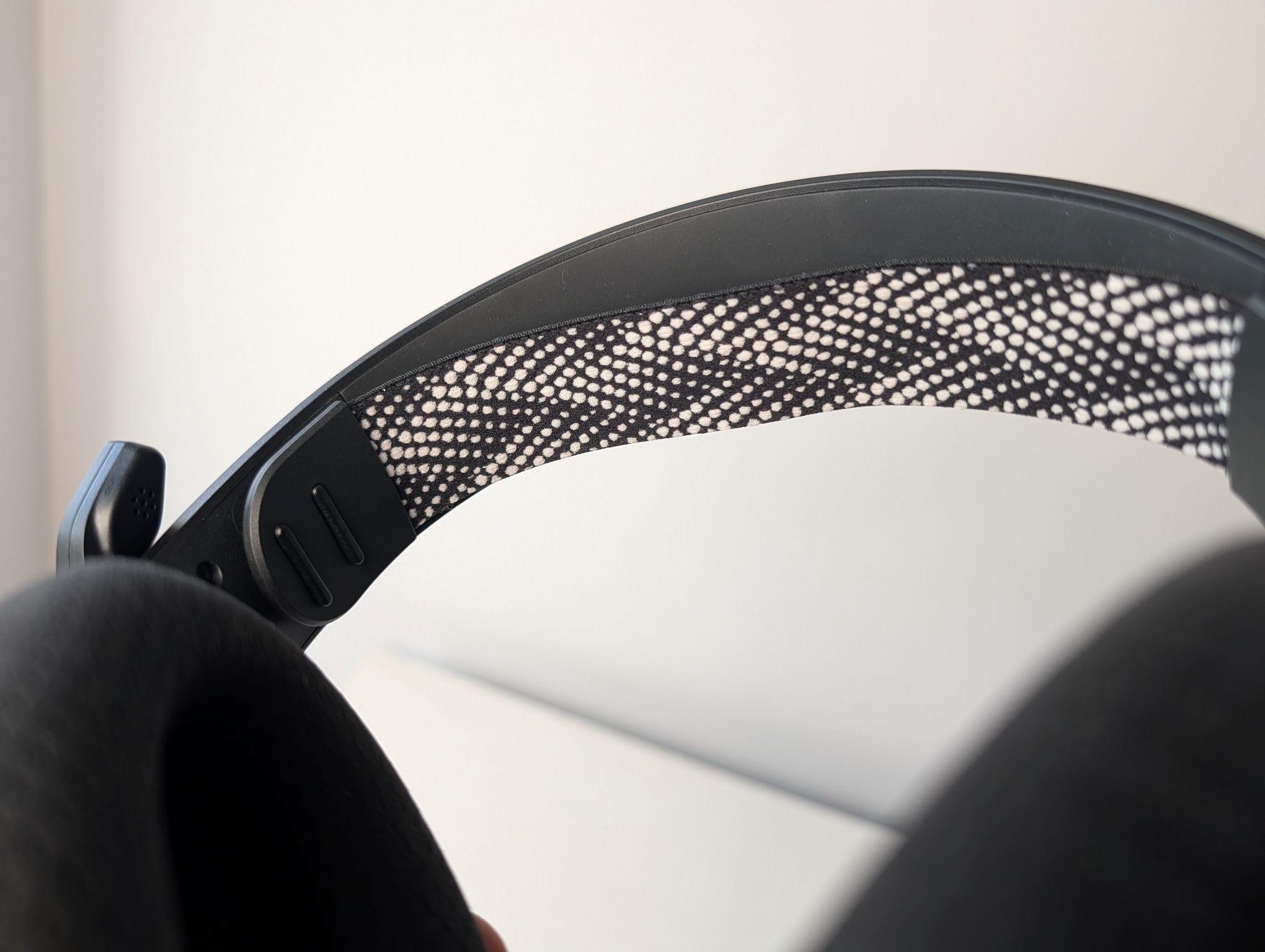
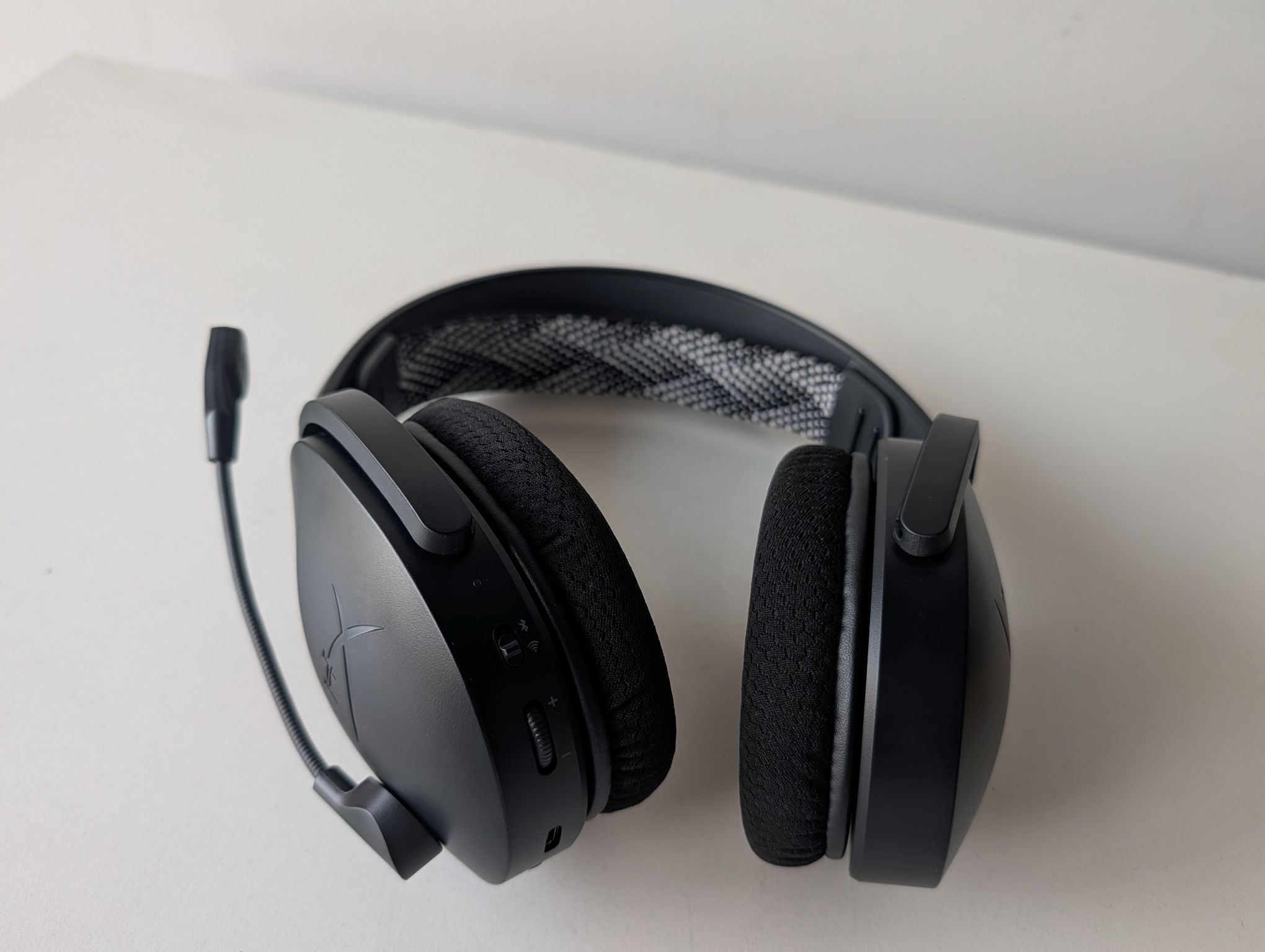
The Cloud Jet fits securely on my head, and surprisingly, it also fits my two-year-old toddler comfortably. I’ve tried other headsets on him out of curiosity, and most struggle even to pivot properly. The Cloud Jet adapts easily. That tells me the ergonomics were carefully engineered. The absence of adjustable rails also reinforces the structural rigidity. The strap handles size adjustment seamlessly. The overall design feels robust and thoughtfully executed.
The earcups are padded with foam that doesn’t feel ultra-premium but also doesn’t feel cheap. I’ve been testing this during winter, so I can’t fully comment on sweat management in peak summer conditions. So far, I’ve experienced no discomfort. The lightweight nature of the headset contributes heavily to its comfort.
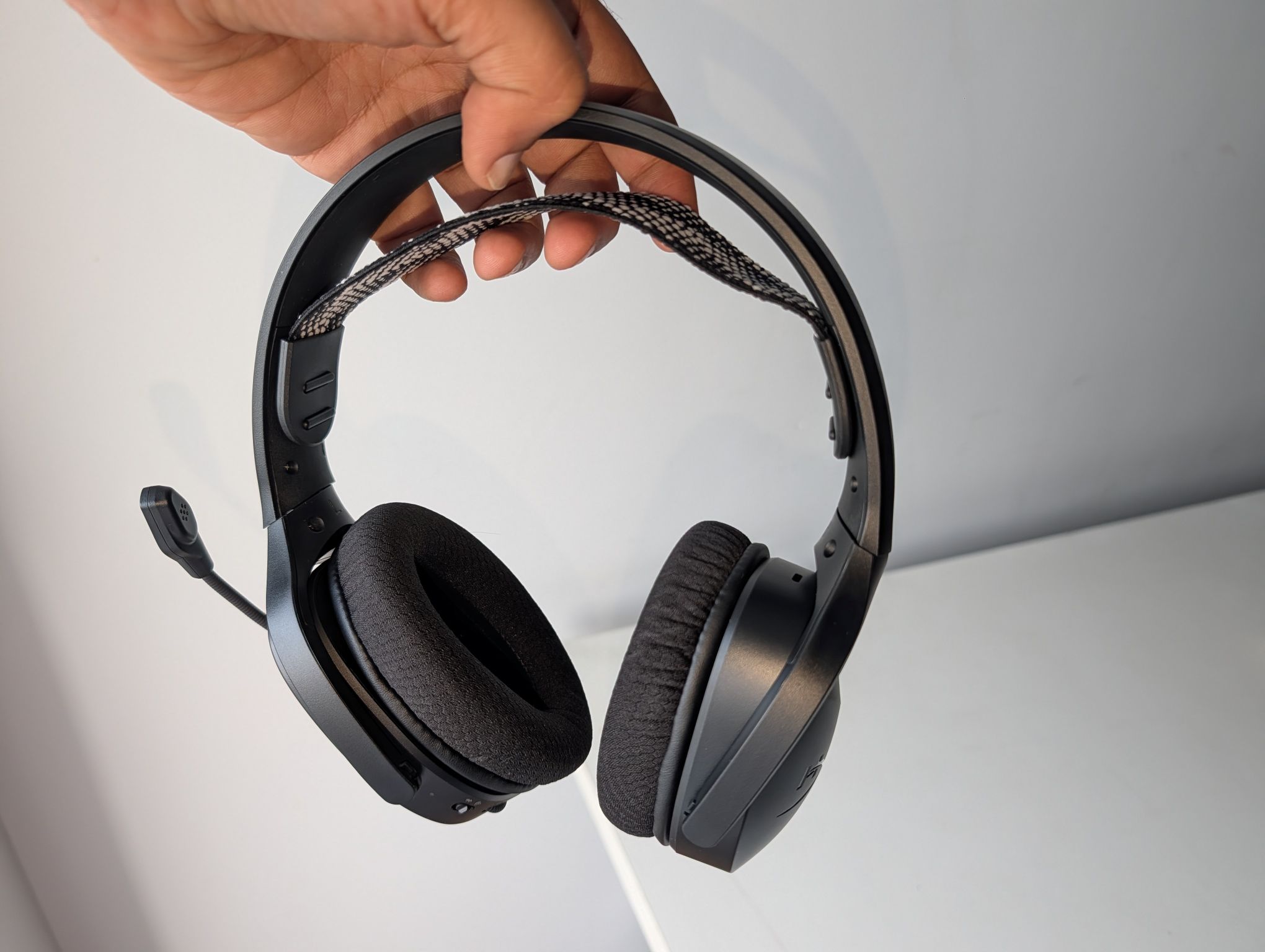
One practical advantage is the absence of synthetic leather that tends to degrade quickly in humid environments. Many headsets suffer from peeling ear cushions over time. The Cloud Jet avoids that problem altogether. My only long-term concern is whether the stretchable strap will lose elasticity after months of use. It is replaceable, but in India, finding replacement accessories can sometimes be a challenge. If HyperX ensures reliable service support locally, the Cloud Jet could become extremely compelling in this segment.
Features
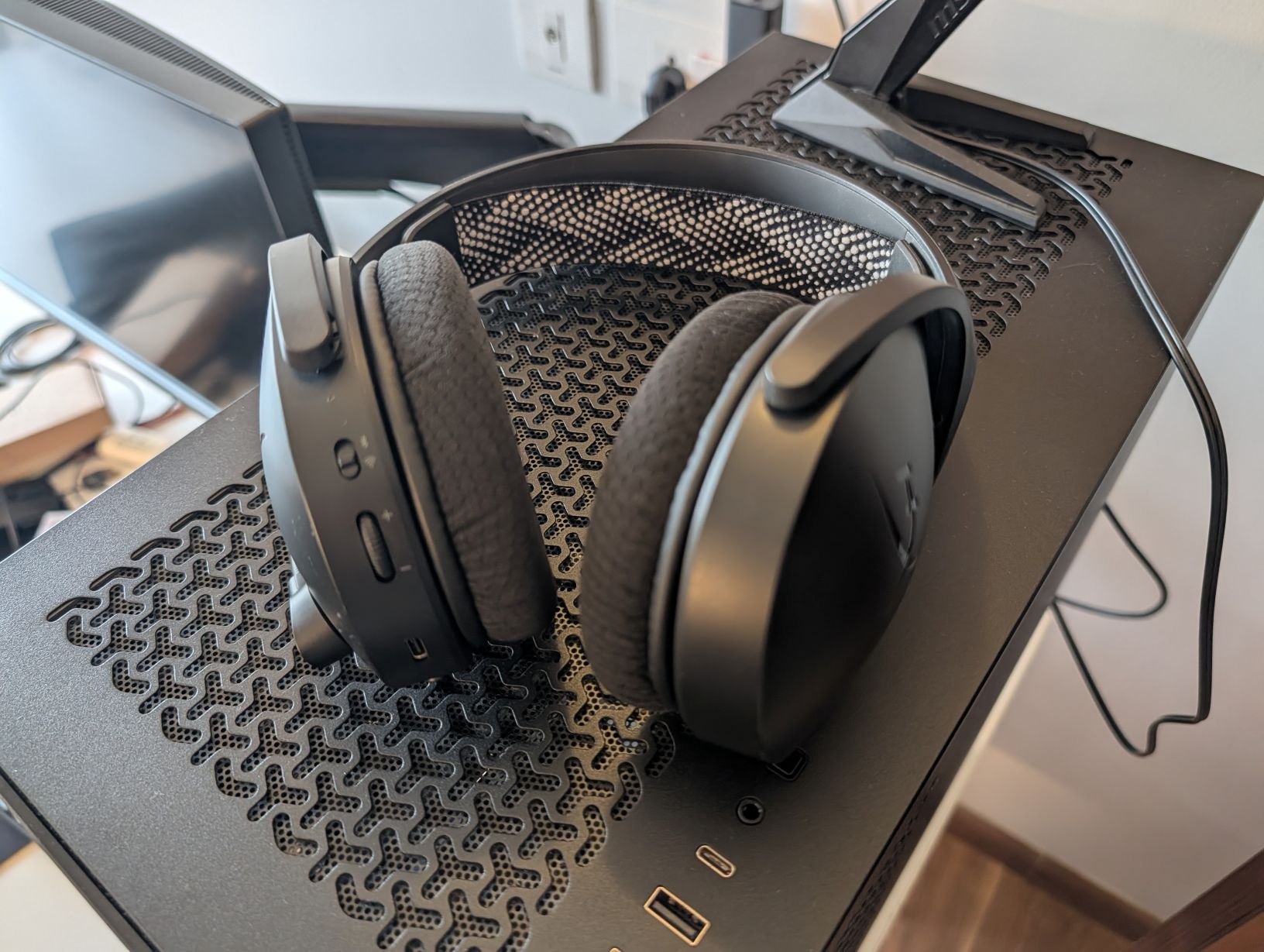
The Cloud Jet uses a USB dongle for 2.4GHz wireless connectivity. Plug it into your PC or laptop, and it works immediately. There is no requirement to install HyperX NGENUITY software. All essential controls are accessible directly from the headset. Bluetooth pairing is equally simple. In practical terms, this means you can be gaming on your PC via the 2.4GHz connection and switch to Bluetooth when a phone call comes in. After the call, switching back to wireless gaming is seamless. That level of flexibility is valuable in daily use.
A volume knob sits below the left earcup. It’s tactile and easy to access mid-game. The microphone is non-detachable, which I personally prefer. Detachable mics tend to get misplaced. The Cloud Jet’s mic swivels upward to mute and downward to unmute. It’s intuitive and reliable. Over time, volume wheels and mute mechanisms can develop issues in some headsets. So far, everything on the Cloud Jet has functioned smoothly.
Now, about the microphone quality. This is where cost optimization is evident. The mic sounds slightly compressed and thin. Gain levels are on the lower side. For online gaming, Discord calls, and Zoom meetings, it performs adequately. For podcasting or professional recording, it won’t suffice. Given the price and feature set, this compromise feels understandable.
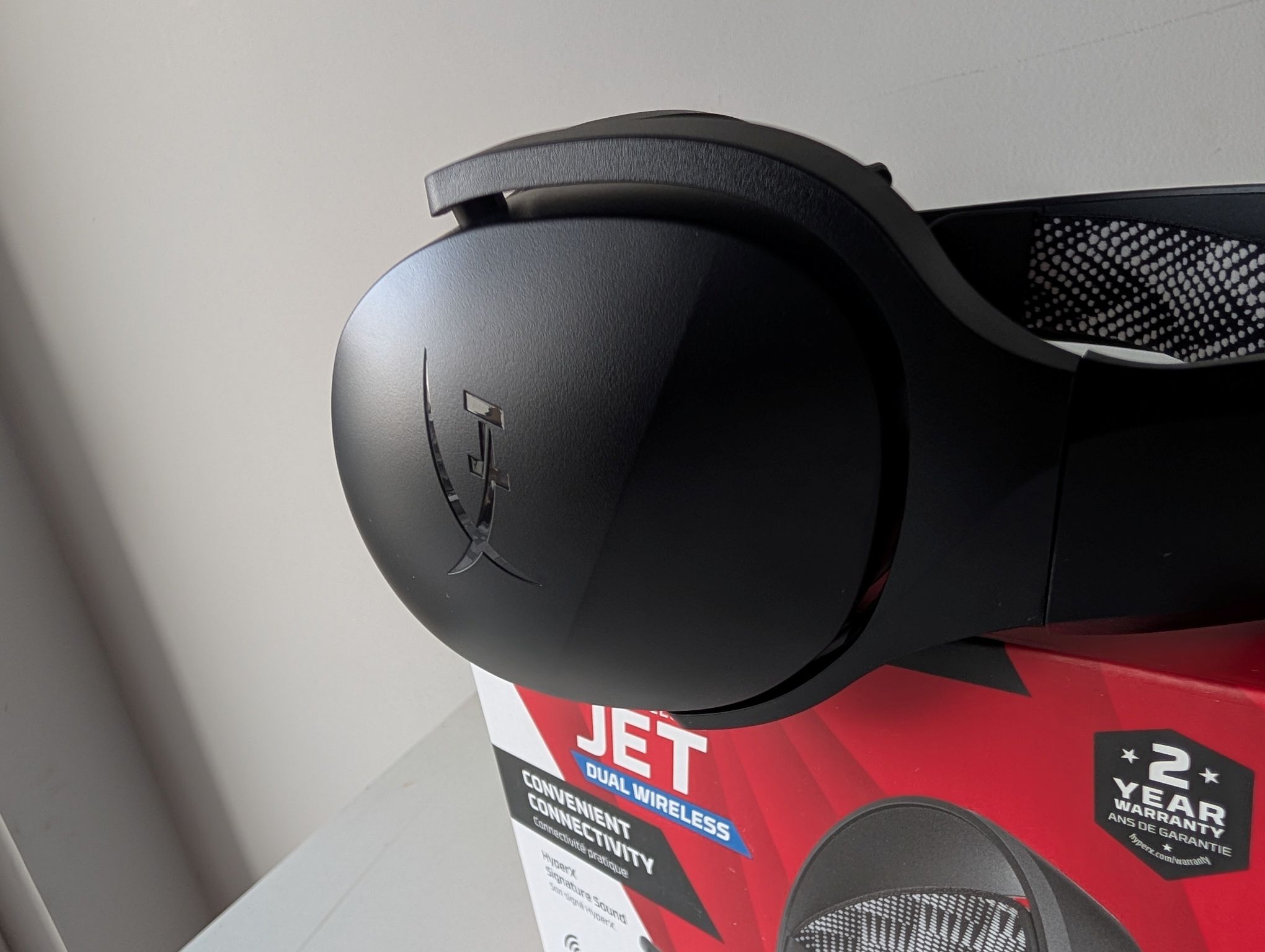
In terms of passive noise isolation, the Cloud Jet performs reasonably well. When muted, I can still hear my PC fans. Once audio is playing, external noise becomes much less noticeable. Leakage is controlled effectively; people sitting nearby won’t be disturbed at normal listening levels.
Sound Quality
This is always the section I care about the most.
I’m very familiar with HyperX’s sound signature. Over the years, I’ve watched it evolve into something more refined and balanced. As always, audio impressions are subjective. For context, my reference earphones for music are the neutral Shure SE846. Yes, I do think that the Apple Airpods Pro 2 and 3 sound decent. Sennheiser HD525 is my go-to headset because I just love how musical it sounds. They’re exceptional for music but not ideal for gaming. The Logitech G Pro X offers a strong balance between gaming performance and music playback. I’m not giving these insights for comparison; I’m giving these so that you can put something tangible to my subjective views.
The Cloud Jet leans toward gaming tuning, yet it performs better with music than I expected. In fact, it’s genuinely usable for music, which is rare in this price category. Most gaming headsets at ₹4,000 struggle badly with musical detail.
Bass
This isn’t a bass-heavy headset, which is a positive. The bass is tight, punchy, and controlled. It does not bleed into the mids. Sub-bass depth is limited, especially compared to more expensive headphones, and I did notice the lack of deep rumble. That said, the tuning prioritizes clarity over impact. In games, explosions feel focused and defined. They aren’t overly detailed, but they also aren’t bloated. HyperX clearly chose to execute one thing cleanly rather than attempting exaggerated depth. We see this to the general trend with the design and tuning philosophy of the Cloud Jet.
Mids
The mids are slightly recessed. Normally, I prefer a stronger mid presence for vocal richness and instrumental timbre. Here, the presentation feels relaxed and smooth. Despite the recessed nature, detail remains present. Vocals and dialogue are clear. Guitar solos and layered vocals lack some depth compared to higher-end gear, yet the listening experience remains enjoyable. I didn’t expect to enjoy music on this headset as much as I did. That alone is a significant positive.
Treble
Treble performance is restrained. It avoids harshness and excessive brightness, something a lot of gaming headsets suffer from. While it doesn’t offer standout sparkle, it maintains clarity without fatigue. For long gaming or content consumption sessions, this tuning works extremely well. The overall sound signature aligns with the headset’s physical design – lightweight, comfortable, and easy to live with.
Soundstage
The soundstage is airy and reasonably wide for a headset in this category. The deep earcup design helps create a sense of spatial separation. Positional cues in games are clear enough to provide competitive awareness. Frankly, I was pleasantly surprised by the overall audio performance. In my experience, it outperforms the significantly more expensive ASUS ROG Pelta in both tuning and comfort.
To summarize the sound: everything works well. Nothing is extraordinary, yet nothing is problematic. The presentation is relaxed, clear, and crisp. It doesn’t offend – and as someone who is particular about audio, that matters. And for a gaming headset to achieve that, that’s a feat.
Conclusion
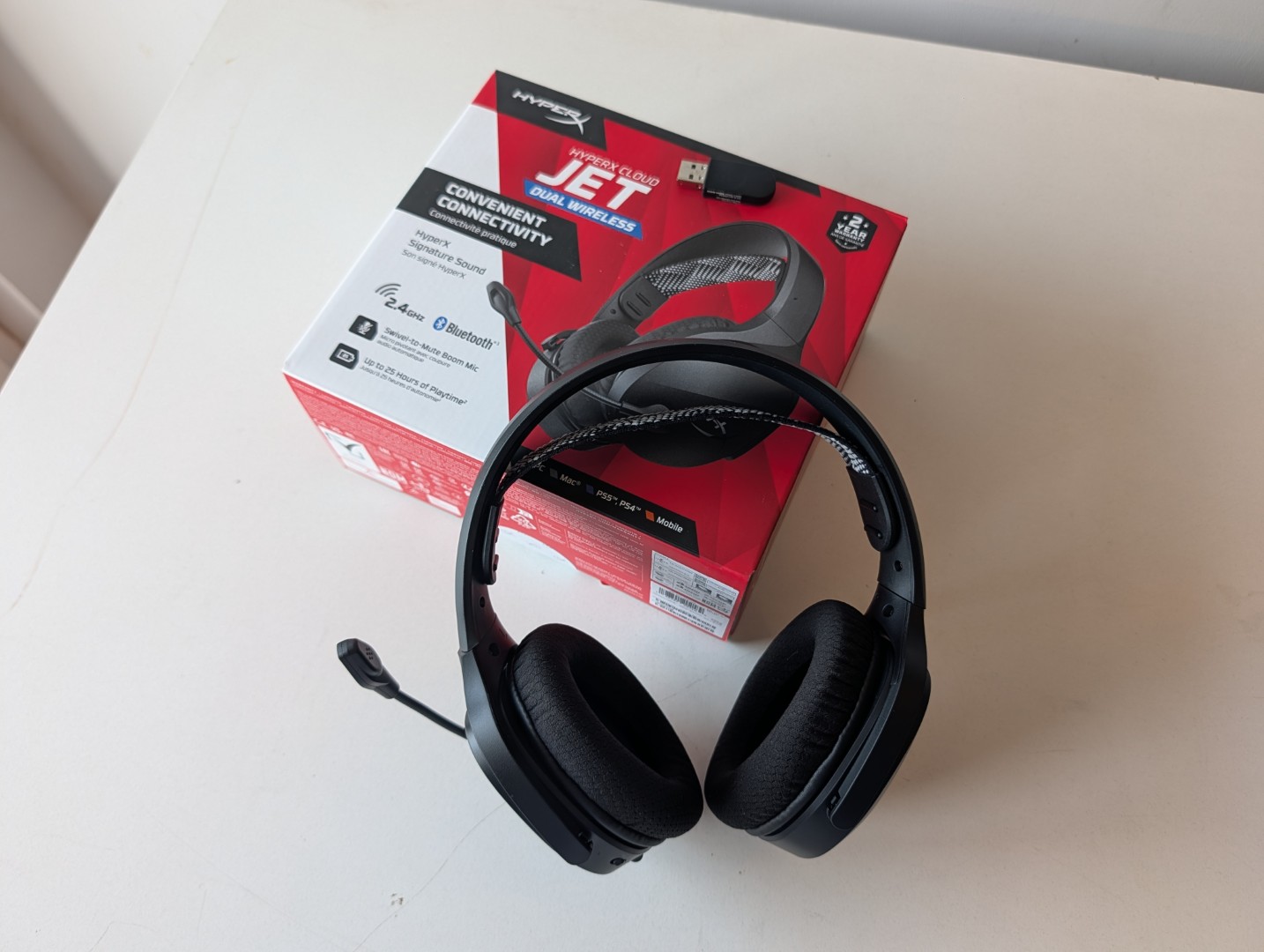
The HyperX Cloud Jet is a strong product for its price. It delivers essential modern features, including dual-band wireless connectivity and Bluetooth. The build quality feels robust and daily-use friendly. Comfort is excellent across different head sizes. The tuning is balanced and versatile enough for gaming, music, and media consumption.
The microphone is the weakest element, though still serviceable for typical gaming communication.
In the ₹4,000 bracket, you genuinely can’t go wrong with the Cloud Jet. It offers modern connectivity, long-lasting comfort, respectable audio performance, and reliable construction. For gamers looking for a lightweight, wireless headset without overspending, this is a sensible and well-executed choice.