ARC Raiders is one of those rare PC games where you can tell, within the first hour, that the developers actually understand modern GPU architectures. Not in the marketing-deck sense of “RTX support,” but in the far more meaningful way where the engine behaves predictably when you start pushing and pulling on settings. On GeForce RTX 5000 GPUs in particular, the game feels extremely well balanced, not just fast. There’s a big difference between a game that posts good numbers and one that scales cleanly, and ARC Raiders firmly belongs in the latter camp.

There’s a big difference between a game that posts good numbers and one that scales cleanly, and ARC Raiders firmly belongs in the latter camp.
For context, my test system is built around Intel’s Core Ultra 285K, paired with an MSI Z890 Tomahawk motherboard and an RTX 5080 Founders Edition. This isn’t a fringe or artificially constrained setup, but it’s also not some exotic, overclocked showpiece. It’s a straightforward high-end PC that exposes weak optimisation very quickly when a game has it — and ARC Raiders simply doesn’t.
Over the last few years, DLSS and Frame Generation have quietly become a double-edged sword for PC gaming. On one hand, they are genuinely impressive technologies. On the other, they’ve also given some developers an easy escape route. When you know DLSS can brute-force frame rates back into acceptable territory and frame generation can inflate numbers on a graph, the incentive to deeply optimise your renderer, asset streaming, and CPU-GPU synchronization drops. We’ve all played games where performance only starts to look “fine” once DLSS is switched on, and native rendering feels like an afterthought. That’s the unnecessary evil of modern upscaling tech, not the technology itself, but how often it’s used to compensate for weak fundamentals.
ARC Raiders very clearly doesn’t fall into that trap.
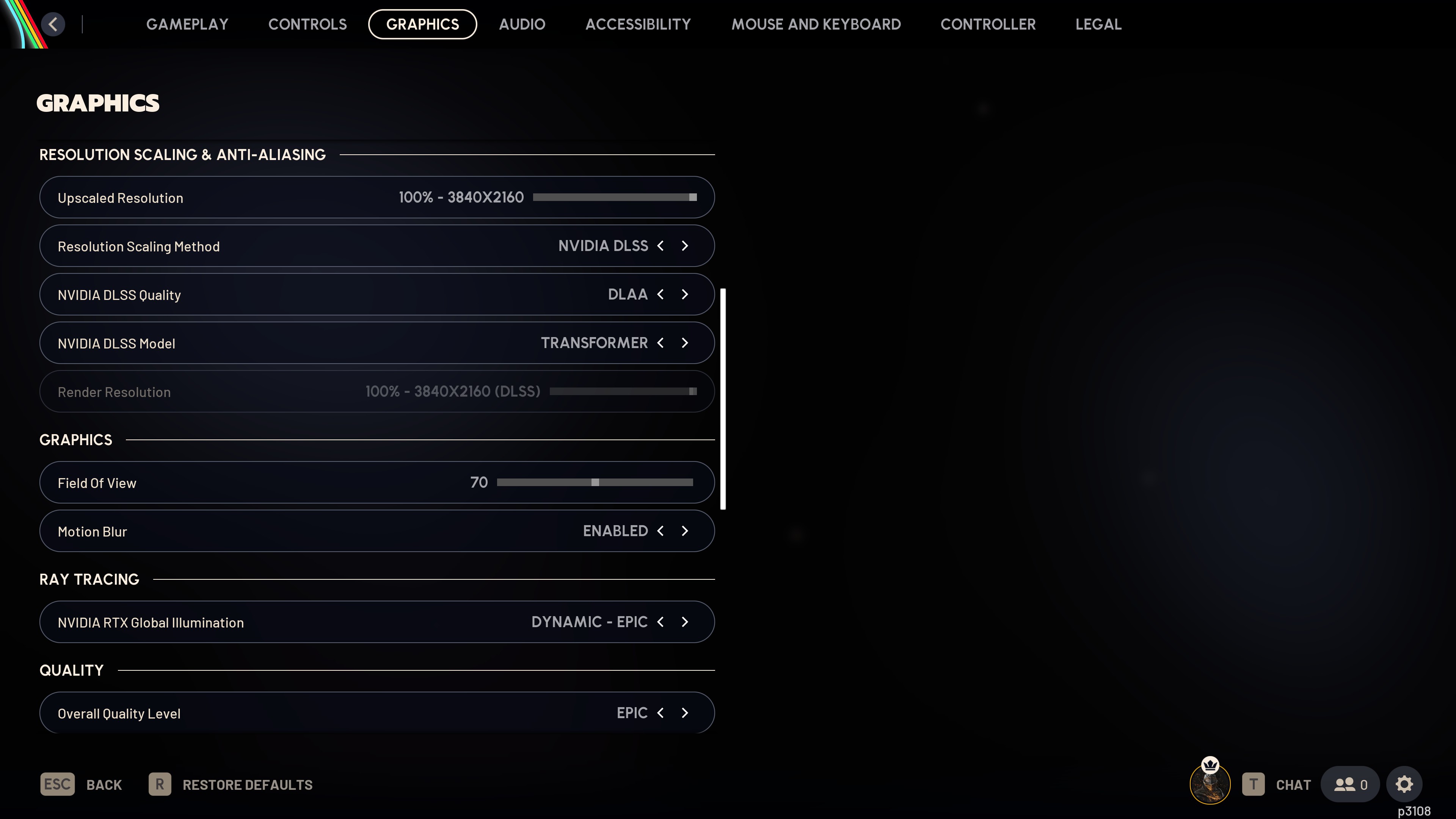
What stood out immediately was how strong and stable the baseline performance was before I enabled any of NVIDIA’s newer features. At high-end settings with DLAA enabled, the game sat around the 85 FPS mark and, more importantly, stayed there. Frame pacing was consistent, camera movement felt smooth, and heavy scenes didn’t cause the kind of micro-stutter that usually points to shader compilation or asset streaming issues. This kind of stability suggests the developers have actually spent time optimising the core rendering pipeline rather than assuming upscaling would do the heavy lifting.
It’s also worth clarifying what DLAA actually is, because it’s often misunderstood. DLAA, or Deep Learning Anti-Aliasing, uses the same neural network approach as DLSS, but without upscaling. The game is rendered at native resolution, and the AI is used purely to improve edge quality, temporal stability, and fine detail reconstruction. In other words, DLAA is about image quality, not performance. When implemented well, it can produce an image that’s cleaner and more stable than traditional TAA, without the softness or shimmer that often comes with it.
DLAA feels like it’s being used for what it was originally designed for: image quality, not damage control. In ARC Raiders, DLAA is implemented properly. With it enabled, the image looks noticeably better than without it. Fine geometry holds together during motion, distant details remain stable, and the overall presentation feels sharper without becoming artificially crisp. Crucially, this improvement doesn’t come with a disproportionate performance hit, which tells you the engine’s motion vectors and temporal data are solid enough to support DLAA without falling apart.
DLAA feels like it’s being used for what it was originally designed for: image quality, not damage control.
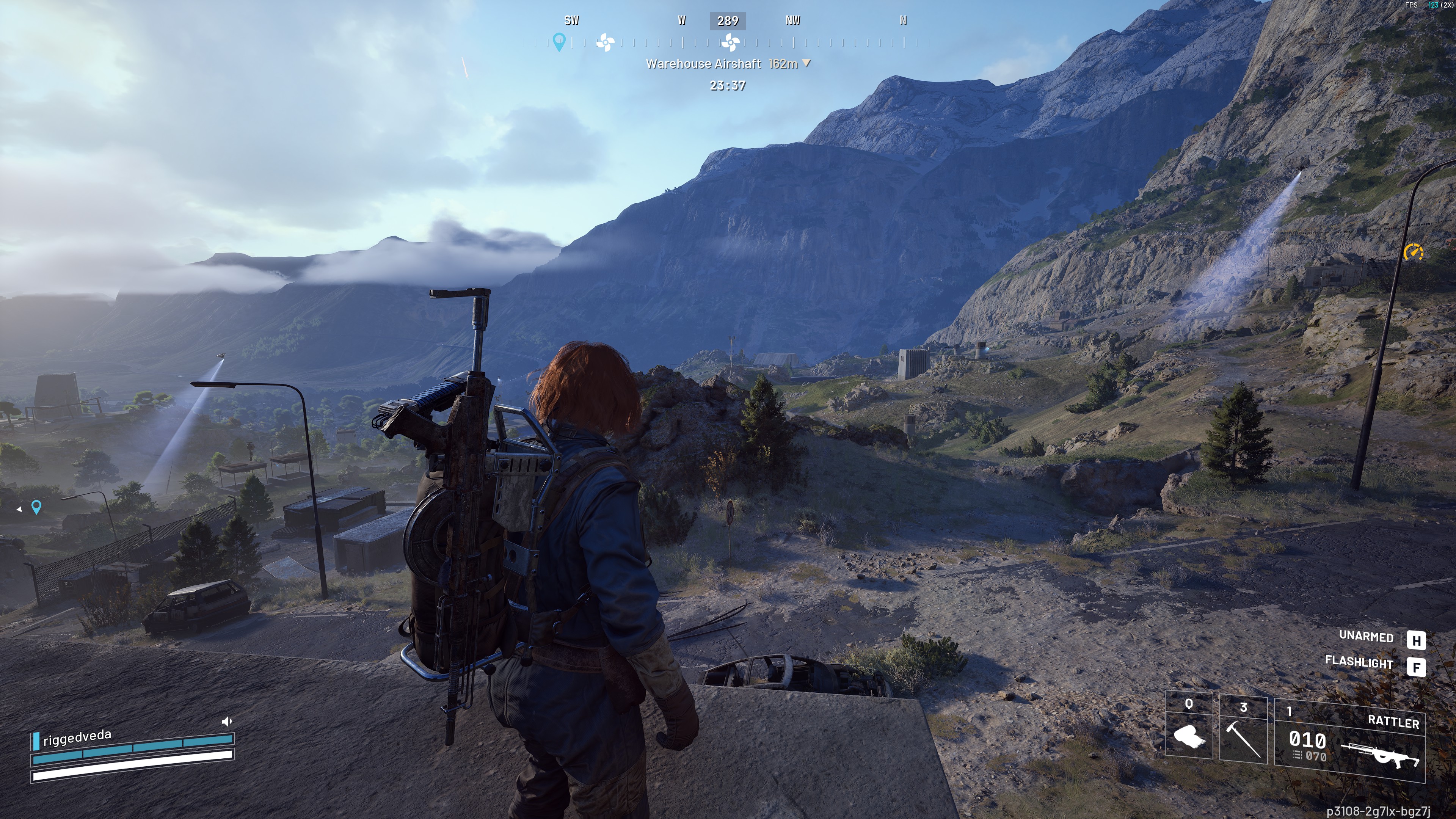
The scalability really reveals itself when frame generation enters the picture. Starting from a roughly 60 FPS native baseline, enabling 2x Frame Generation pushed performance to around 135 FPS. The jump felt clean and predictable, not artificial. Input response remained tight, motion stayed coherent, and there were no obvious artefacts or simulation oddities. This is exactly how frame generation should behave — as a multiplier on top of a well-optimised base, not as a band-aid for unstable performance. When the base frame rate is consistent, frame generation enhances the experience rather than exposing weaknesses, and ARC Raiders benefits massively from that solid foundation.
When the base frame rate is consistent, frame generation enhances the experience rather than exposing weaknesses, and ARC Raiders benefits massively from that solid foundation.
What I appreciate most is that ARC Raiders never feels like it’s leaning on DLSS-era technologies as a crutch. The game runs well because it’s been properly optimised, not because it assumes everyone will turn on upscaling and frame generation by default. DLAA improves an already clean image. Frame generation amplifies an already stable frame rate. That distinction matters, especially on high-end GPUs like the GeForce RTX 5000 series, where you want scalability, not excuses.
In a PC landscape where too many releases feel half-finished until you toggle the right combination of reconstruction features, ARC Raiders is refreshingly honest. It respects native performance, scales logically with modern NVIDIA features, and proves that good optimisation still exists when developers actually commit to it. For RTX 5000 owners, it’s not just a game that runs well, it’s a reminder of how PC games are supposed to behave when the fundamentals are done right.