Lenovo Idea Tab Plus Review: A Good Tablet That Knows Its Lane
Lenovo launched the Idea Tab Plus (TB361ZU) in India in December 2025 at ₹27,999 for the 8GB RAM / 256GB storage Wi-Fi + 5G variant, bundled with a Lenovo Tab Pen Plus stylus and folio case. The positioning is clear: a large, lightweight, well-built tablet for students, casual users, and anyone who wants a big screen with mobile data connectivity for under ₹30,000. After testing the device against real-world tasks and running a full benchmark suite on our review unit, here is the honest picture: what works, what does not, and who should actually buy this.
Specifications
| Display | 12.1-inch IPS LCD, 2560×1600 (2.5K), 90Hz, 800 nits HBM, 96% DCI-P3, 16:10 |
| Processor | MediaTek Dimensity 6400 (6nm) |
| GPU | Mali-G57 MC2 |
| RAM / Storage | 8GB / 256GB (LPDDR4X, UFS 2.2) |
| Battery | 10,200mAh, 45W fast charging — 14+ hours video playback |
| Connectivity | 5G SIM slot, Wi-Fi 5, Bluetooth 5.2, USB 2.0 Type-C, GPS |
| Stylus | Lenovo Tab Pen Plus (included) — 4,096 pressure levels, tilt, palm rejection |
| Speakers | Quad speakers, Dolby Atmos |
| IP Rating | IP52 |
| OS | Android 16 (launched on Android 15), ZUI 17 |
| Dimensions / Weight | 278.8 × 181.1 × 6.3mm / 530g |
| Price in India | ₹27,999 (8GB/256GB Wi-Fi + 5G) |
Design and Build
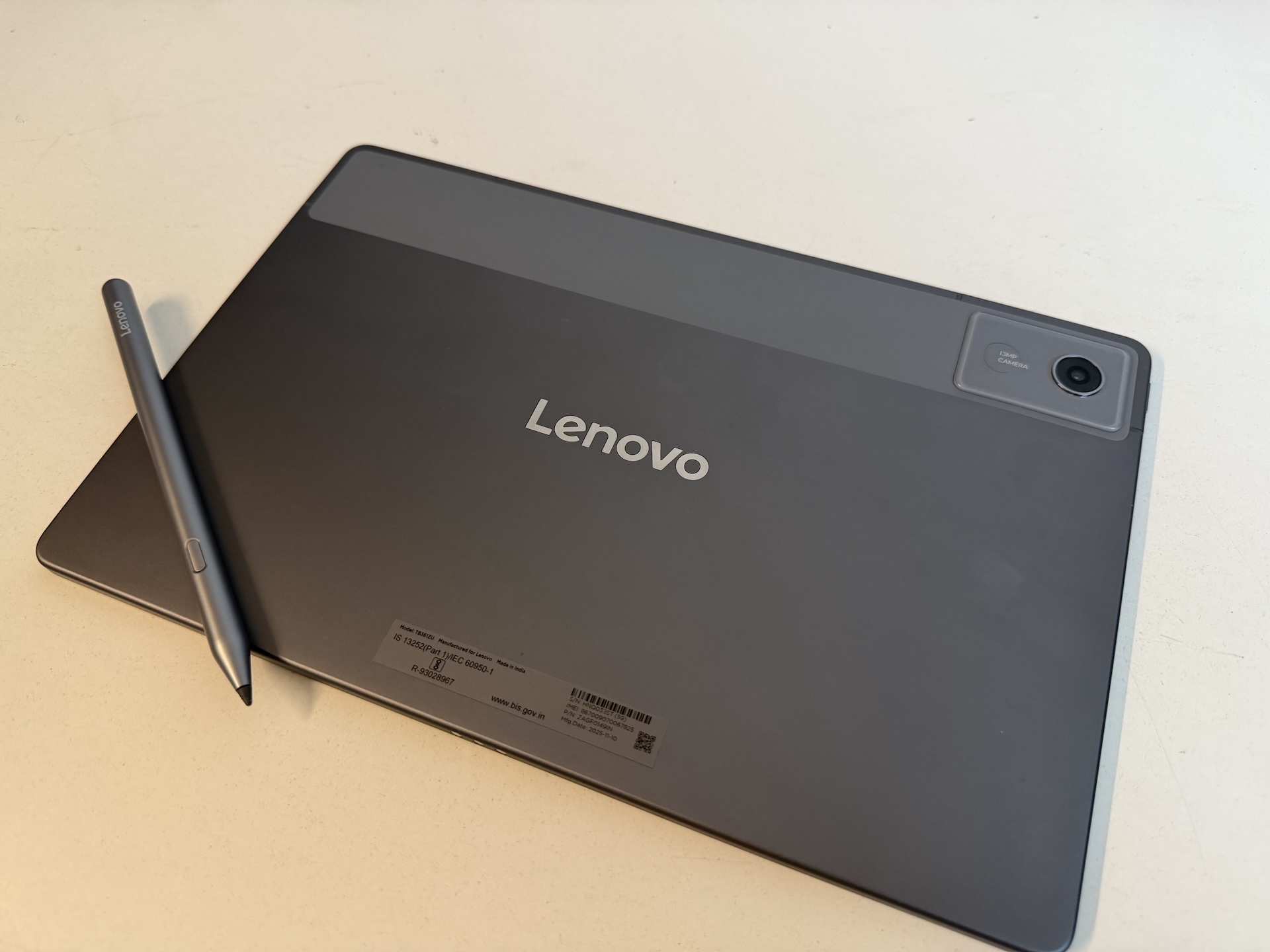
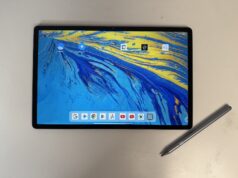
The first thing you notice when you pick up the Idea Tab Plus is how light it is. At 530 grams and just 6.3mm thick, it is genuinely one of the lightest 12-inch tablets available in India at any price. Compared to the 620-gram Idea Tab Pro, you feel the difference immediately. For students carrying a tablet between classes, or anyone who holds their device for long reading sessions, that 90-gram delta is meaningful.
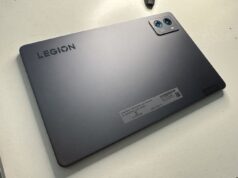
The construction is full metal, an aluminium frame and back that feels premium and sturdy. There is no flex, no cheapness, and nothing that suggests budget origins when you are holding it. Lenovo has also given it IP52 certification, meaning it can handle light splashes and some dust exposure, useful protection for a device that will live in bags and on desks.
At 278.8 x 181.1 x 6.3mm, the tablet is slim enough that it disappears into a bag. There is a USB-C 2.0 port, a microSD card slot expandable up to 2TB, and, critically, a SIM card tray for 5G connectivity. The pogo pin connector present on the Idea Tab Pro is absent here, so there is no keyboard dock accessory for this model.
Display

The 12.1-inch IPS LCD panel runs at 2560 x 1600 pixels (2.5K) with a 90Hz refresh rate and a 16:10 aspect ratio. At 249 PPI, text is sharp and content looks crisp. The 90Hz rate makes scrolling and animations feel fluid.
Brightness is where this display earns genuine respect. The screen reaches 600 nits typically and 800 nits in High Brightness Mode, a significant step up from the Idea Tab Pro’s 400-nit ceiling. Outdoor visibility is notably better. Reading in bright indoor environments, near windows, or in naturally lit spaces is comfortable in a way that the Pro cannot match. Lenovo rates DCI-P3 colour coverage at 96%, meaning colours are vivid and accurate for media consumption.
There is no HDR support on the Idea Tab Plus. For the typical use case of this tablet like reading, streaming, note-taking and video calls, the display is genuinely good and better in some real-world scenarios than its Pro sibling. The 16:10 aspect ratio suits both widescreen streaming and document viewing well.
| Tablet | Size | Resolution | Refresh Rate | Peak Brightness | HDR |
|---|---|---|---|---|---|
| Lenovo Idea Tab Plus | 12.1″ | 2.5K (2560×1600) | 90Hz | 800 nits HBM | No |
| Redmi Pad 2 Pro | 12.1″ | 2.5K (2560×1600) | 120Hz | 600 nits HBM | Dolby Vision ✓ |
| OnePlus Pad Go 2 | 12.1″ | 2.8K (2800×1980) | 120Hz | 900 nits HBM ✓ | Dolby Vision ✓ |
| Samsung Galaxy Tab A9+ | 11″ | FHD+ (1920×1200) | 90Hz | 464 nits | No |
The Idea Tab Plus beats the Redmi on display brightness (800 vs 600 nits), making it better for bright indoor use and outdoors, despite losing to the OnePlus Pad Go 2’s best-in-class 900-nit panel. Both share the same 2.5K resolution at 12.1 inches, but the Redmi adds 120Hz versus the Plus’s 90Hz. The OnePlus panel at 2.8K is visibly sharper on a 12-inch screen.
Performance
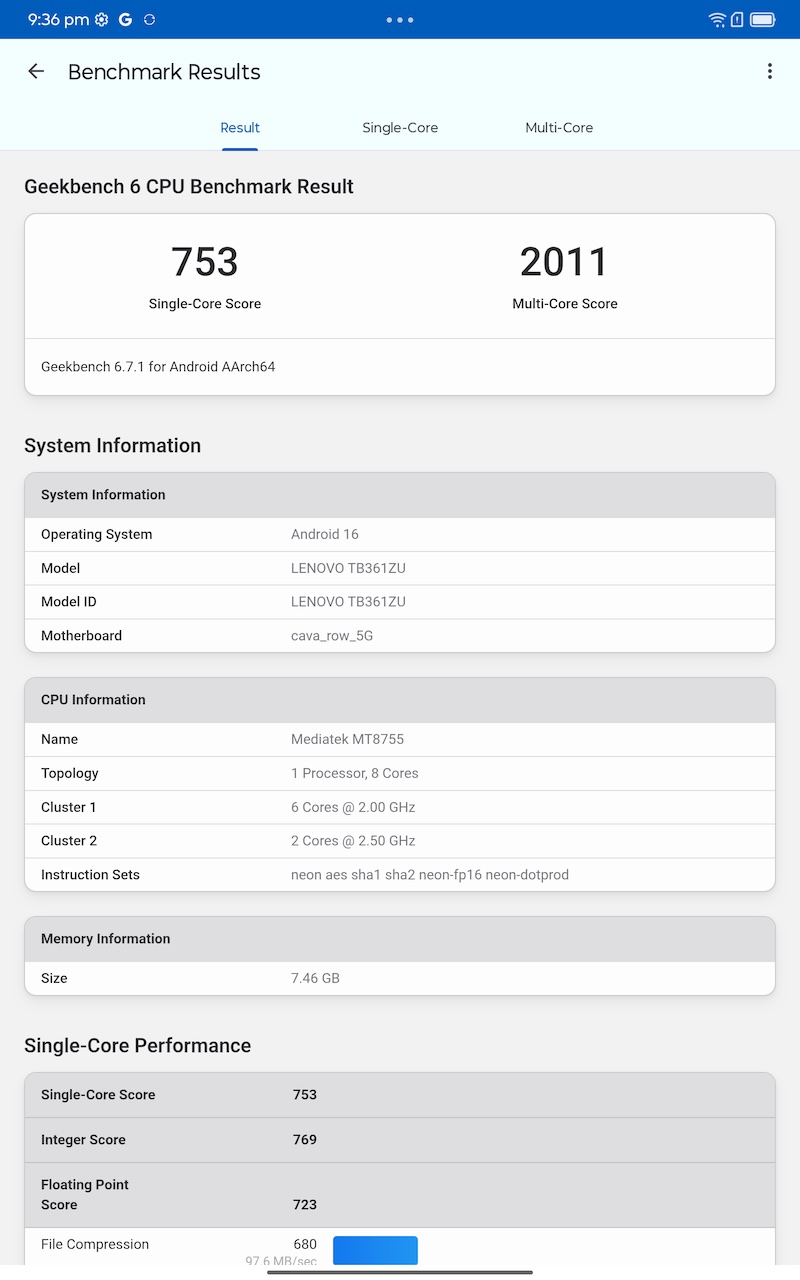
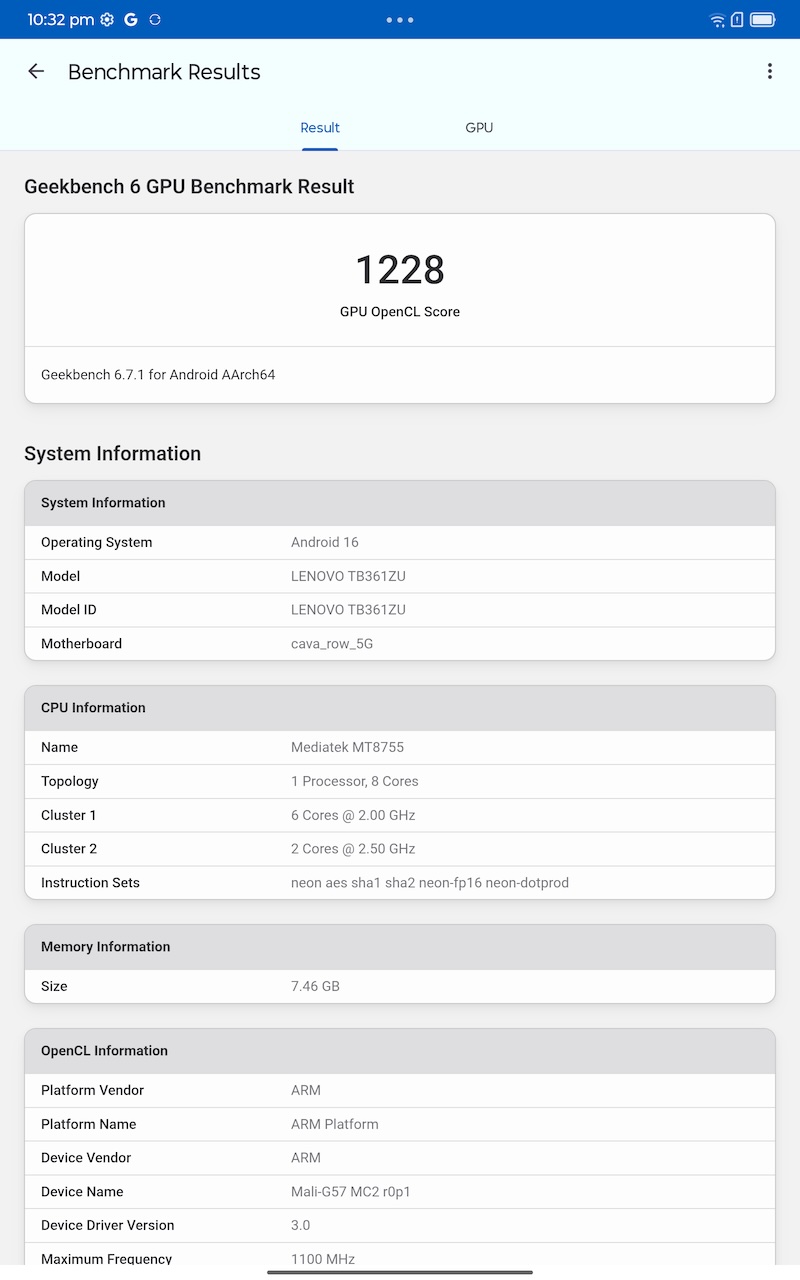
The Idea Tab Plus is powered by the MediaTek Dimensity 6400 (MT8755) – a 6nm octa-core chip with two Cortex-A76 performance cores at 2.5GHz and six Cortex-A55 efficiency cores at 2.0GHz. RAM on our review unit is 8GB LPDDR4X. Here are the benchmark results from the actual device in hand:
| Benchmark | Score | Notes |
|---|---|---|
| Geekbench 6 Single-Core | 753 | Budget-tier ceiling |
| Geekbench 6 Multi-Core | 2,011 | Adequate for daily tasks |
| Geekbench 6 GPU (OpenCL) | 1,228 | Mali-G57 MC2 @ 1100MHz |
| 3DMark Wild Life | 1,214 | 7.28 avg FPS — not a gaming chip |
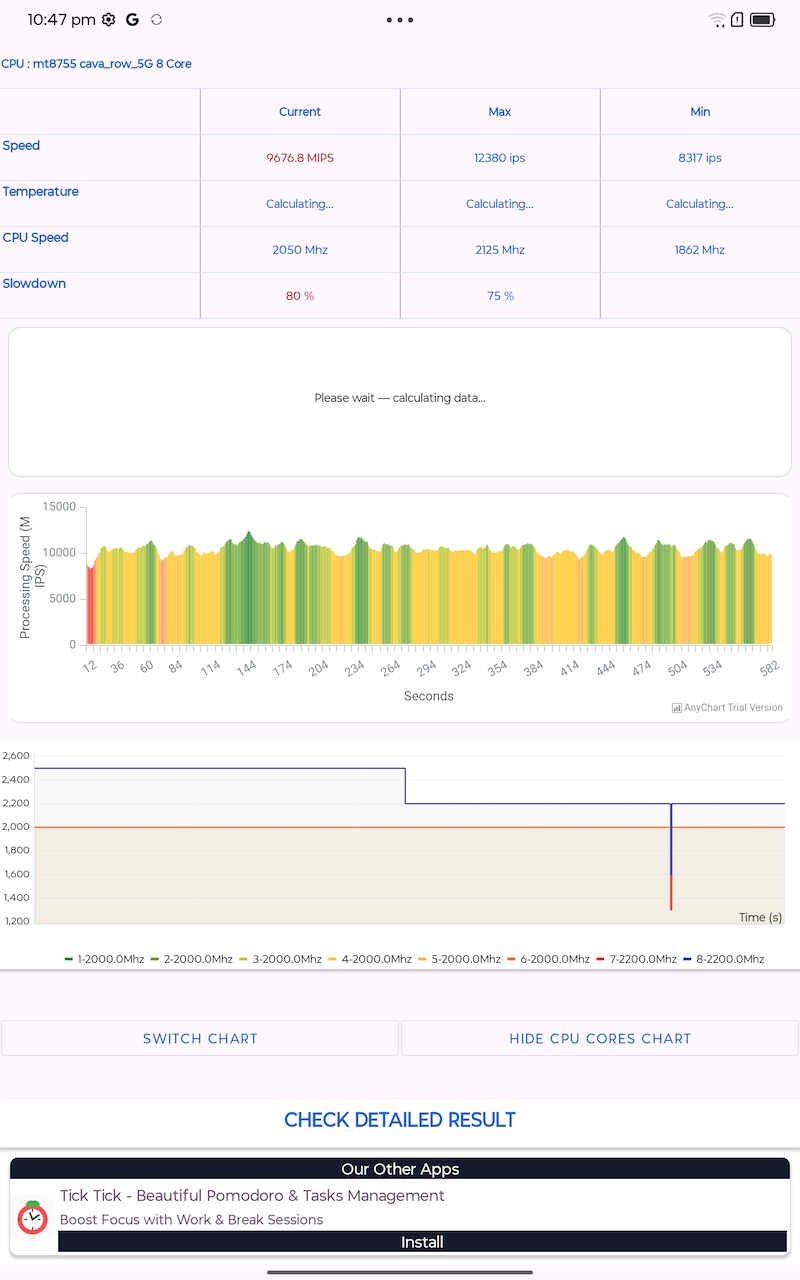
| CPU Throttling Test | 80% throttle | Sustains ~9,677 MIPS; stable curve |
These numbers require honest interpretation. The 80% throttle figure looks alarming, but context matters: the chip never had much headroom to begin with. What the test actually shows is a processor that settles quickly into a stable sustained frequency around 2,050MHz and stays there without dramatic drops. The stability is surprisingly consistent, even if the ceiling is low.
In day-to-day use activities like browsing, streaming, social media, note-taking, video calls and PDF reading, the Idea Tab Plus is perfectly responsive. Apps open quickly enough, split-screen multitasking works, and the 90Hz display makes the overall UI feel smooth. The Dimensity 6400 is adequate for everything this tablet is designed to do. Where it falls apart is under heavy gaming loads.
The Idea Tab Plus’s performance gap versus its competitors is the most important thing a prospective buyer needs to understand. The Dimensity 6400 is a budget-tier chip — a step below the Dimensity 7300 and two steps below the Snapdragon 7s Gen 4. In raw compute, it is outclassed by everything in its price bracket.
| Tablet | Price (5G) | Chipset | GB6 Single | GB6 Multi | GPU Tier | CPU Throttle |
|---|---|---|---|---|---|---|
| Lenovo Idea Tab Plus | ₹27,999 | Dimensity 6400 (6nm) | 753 | 2,011 | Mali-G57 MC2 ★ | 80% drop |
| Redmi Pad 2 Pro 5G | ₹27,999 | Snapdragon 7s Gen 4 (4nm) | 1,253 | 3,312 | Adreno 810 ★★★★ | ~5% drop ✓ |
| OnePlus Pad Go 2 5G | ₹32,999 | Dimensity 7300-Ultra (4nm) | ~1,026 | ~2,932 | Mali-G615 MC2 ★★ | ~5% drop ✓ |
| Samsung Galaxy Tab A9+ | ₹22,494 | Snapdragon 695 (6nm) | 908 | 2,072 | Adreno 619 ★ | Moderate |
OnePlus Pad Go 2 scores estimated from Dimensity 7300-Ultra chip data.
At the same ₹27,999 price, the Redmi Pad 2 Pro 5G delivers 66% better single-core and 65% better multi-core performance. The GPU gap is larger still, the Adreno 810 is in an entirely different tier from the Mali-G57 MC2. In everyday use the Idea Tab Plus remains adequately smooth. But anyone running demanding apps or playing GPU-intensive games will feel the Dimensity 6400’s limitations quickly.
Gaming
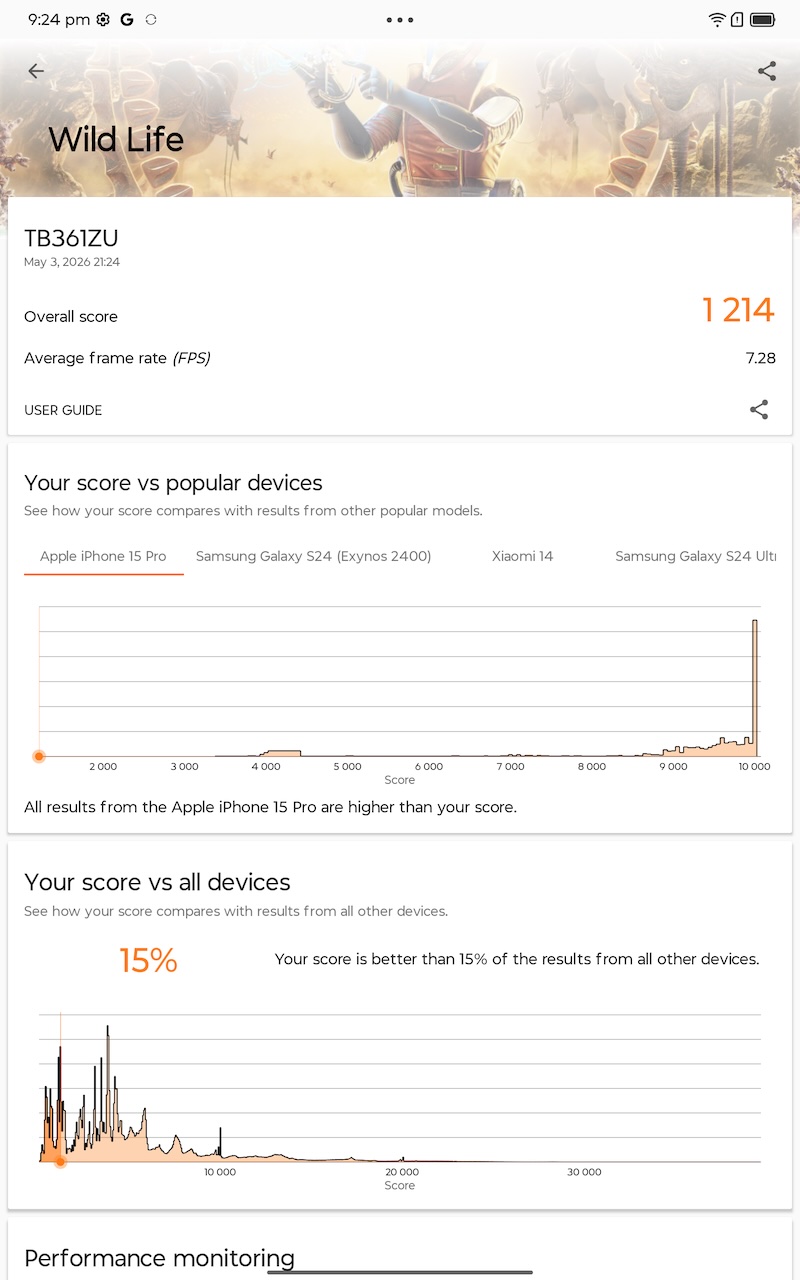
Let us be direct: the Idea Tab Plus is not a gaming tablet, and its benchmarks reflect that clearly. The 3DMark Wild Life score of 1,214 with an average of 7.28fps is a GPU ceiling. For context, the Idea Tab Pro scores 4,771 in the same test – nearly four times higher.
PUBG Mobile is playable at low to medium settings, and for casual players this is fine. The large screen does give you a visual advantage in spotting enemies. But competitive players who want smooth, high-fps gameplay will find the Dimensity 6400’s limits frustrating. Expect smooth gameplay at minimum settings, with noticeable frame drops as graphics settings rise.
Fortnite on the Idea Tab Plus is essentially unplayable at any meaningful setting. The Mali-G57 MC2 simply does not have the GPU headroom for Unreal Engine rendering at a usable framerate. If Fortnite is your primary game, this is the wrong tablet. For lighter titles such as BGMI at minimum settings, Clash of Clans and similar casual games, the Idea Tab Plus handles things without issue. If gaming is central to your tablet use, the Idea Tab Pro is the better investment at a nearly identical price.
| Tablet | PUBG / BGMI | Fortnite | Casual Games | Gaming Rating |
|---|---|---|---|---|
| Lenovo Idea Tab Plus | Low-medium, playable | Unplayable | Fine | Casual only |
| Redmi Pad 2 Pro | 40fps Ultra HD | Medium settings | Excellent | Strong mid-range |
| OnePlus Pad Go 2 | Medium-high settings | Low settings only | Excellent | Mid-range |
| Samsung Galaxy Tab A9+ | Low settings | Poor | Fine | Light gaming |
If gaming is a consideration, the Idea Tab Plus is the weakest performer in this price bracket. The Redmi Pad 2 Pro 5G at the same ₹27,999 is dramatically better, PUBG at 40fps Ultra HD versus the Plus’s low-medium settings is a comparison that matters to any serious PUBG or BGMI player.
Speakers and Audio

The Idea Tab Plus ships with four speakers and Dolby Atmos processing. The quad-speaker setup delivers good stereo separation and a sound profile that is solid for its class – clear and adequately loud for personal viewing in a quiet room. The speakers do not quite reach the volume ceiling or bass depth of the Pro’s JBL-branded system, but for streaming, YouTube, music, and video calls, the audio is more than sufficient.
Battery Life
Battery life is the Idea Tab Plus’s strongest card. The 10,200mAh battery paired with the efficient Dimensity 6400, which runs cooler and draws less power than the Dimensity 8300, delivers exceptional endurance. In looped video playback tests, the Idea Tab Plus has been measured at over 14 hours, significantly better than the Pro’s approximately 7-hour result in the same test.
In practical terms, this is a tablet that a student can take out in the morning at full charge and realistically not think about a charger until the evening of the next day with moderate use. For commuters, travellers, or anyone who uses their tablet away from power outlets, the Idea Tab Plus wins this comparison convincingly. The 45W fast charging is the fastest in its class at this price, meaning shorter time at the wall when you do plug in.
| Tablet | Battery | Fast Charging | Video Playback | 5G |
|---|---|---|---|---|
| Lenovo Idea Tab Plus | 10,200mAh | 45W ✓ | 14+ hours | Yes ✓ |
| Redmi Pad 2 Pro 5G | 12,000mAh | 33W | ~14 hours | Yes ✓ |
| OnePlus Pad Go 2 5G | 10,050mAh | 33W | ~15 hours | Yes (₹32,999) ✓ |
| Samsung Galaxy Tab A9+ | 7,040mAh | 15W only | ~9 hours | Yes ✓ |
Battery is a genuine competitive strength for the Idea Tab Plus. Its 14+ hour video playback matches the Redmi Pad 2 Pro despite a smaller battery, because the Dimensity 6400 draws significantly less power. The 45W fast charging is the fastest in the group. The Samsung Tab A9+ trails badly with a smaller battery and just 15W charging.
Stylus – Lenovo Tab Pen Plus
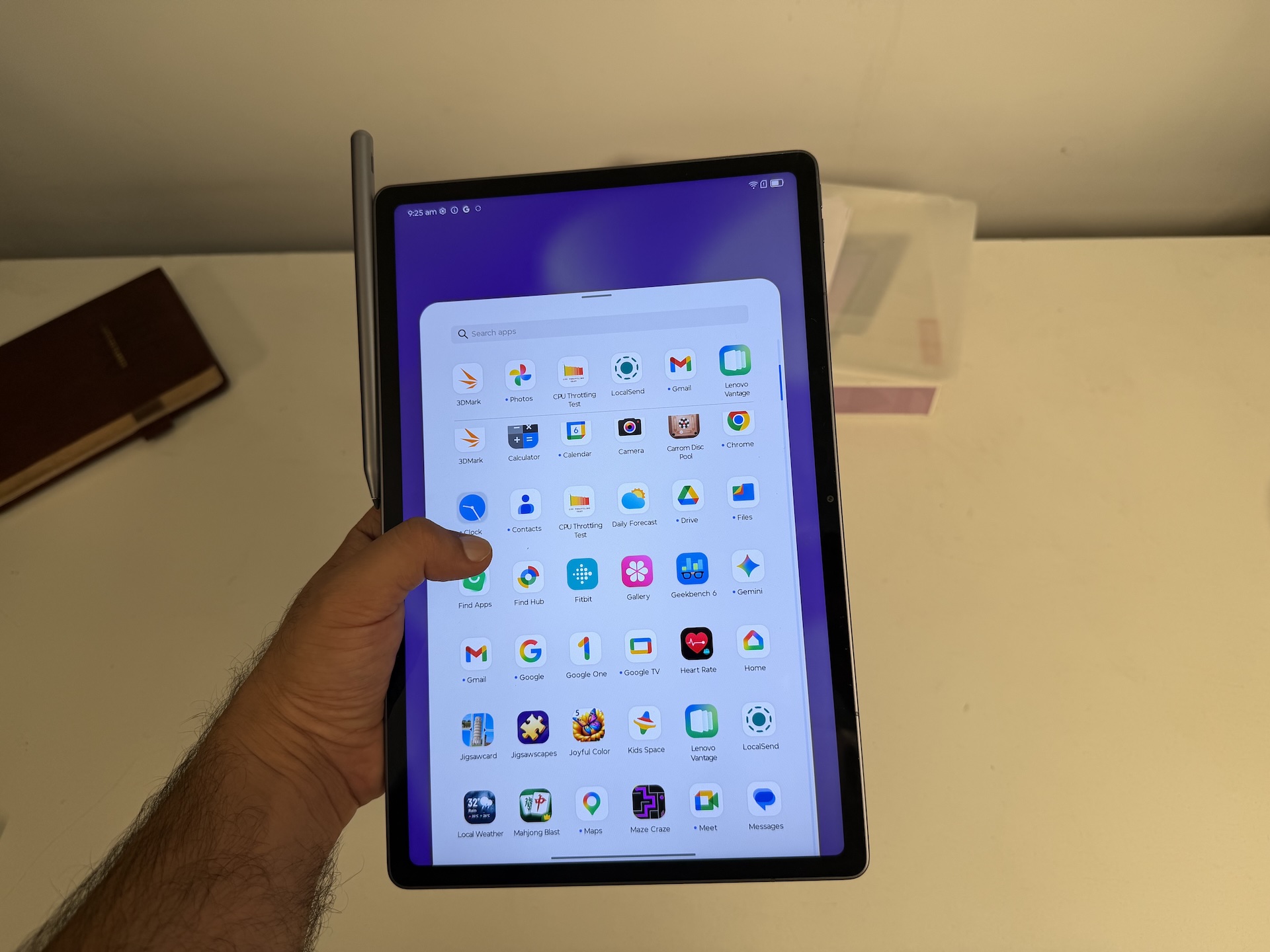
The included stylus on the Idea Tab Plus is the same Lenovo Tab Pen Plus as bundled with the Idea Tab Pro: 4,096 levels of pressure sensitivity, tilt detection, palm rejection, and USB-C charging. Note-taking, annotation, basic sketching, and marking up PDFs all work well. The palm rejection is reliable, and the 90Hz display makes pen strokes feel fluid. Lenovo’s AI Notes app, which can complete and summarise handwritten or typed notes, adds practical utility for academic use.
5G and Connectivity
The Idea Tab Plus includes a SIM card slot with 5G support, a feature the Idea Tab Pro entirely lacks. If you want a tablet that can connect to the internet independently of a Wi-Fi network or phone hotspot, the Idea Tab Plus is the only choice between these two. Travelling, commuting, or being in locations without Wi-Fi becomes a non-issue. 5G band support includes n77, n78, n41, and other major bands relevant to Jio 5G and Airtel 5G deployments in India. VoLTE for voice calls is also supported.
Wi-Fi is limited to Wi-Fi 5, which is the primary connectivity downgrade compared to the Idea Tab Pro’s Wi-Fi 6E. For typical home use, most users will not notice the difference. The USB-C port is USB 2.0, slower than the Pro’s USB 3.2 for large file transfers.
Software
The Idea Tab Plus ships with Android 15 and Lenovo’s ZUI 17 overlay, with our review unit running Android 16. Lenovo’s commitment is two major OS upgrades and four years of security patches. The ZUI interface is clean and light on bloatware. Split-screen multitasking, floating windows, and a taskbar are all present. Google Gemini, Circle to Search, and Lenovo’s AI Notes are pre-installed. Do note that when setting up a new account, Lenovo will deliberately push tons of bloatware which you will have to manually remove.
How the Idea Tab Plus Compares to Its Rivals
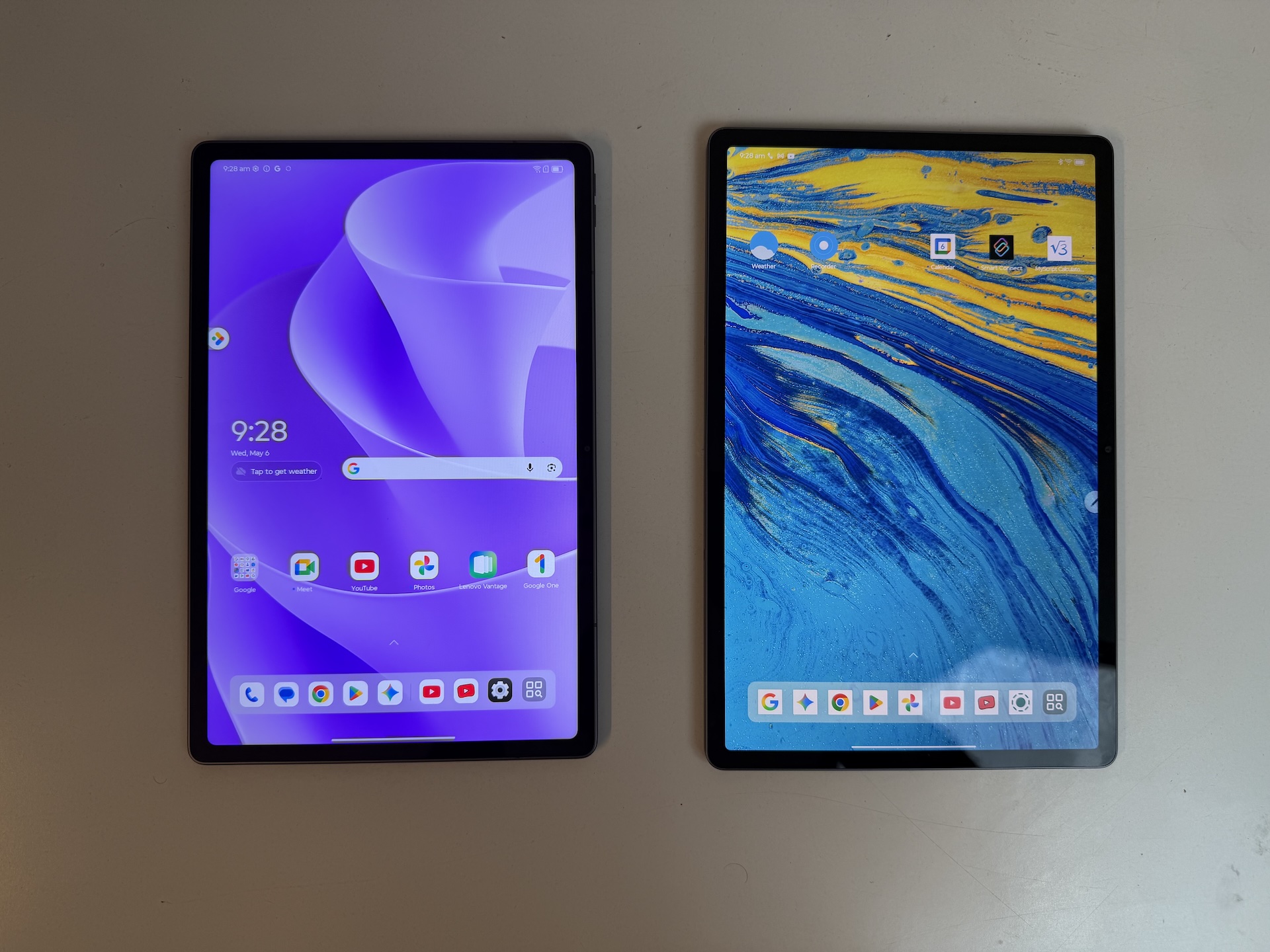
The Idea Tab Plus faces significant competition in the sub-₹30,000 space. The Redmi Pad 2 Pro, OnePlus Pad Go 2, and Samsung Galaxy Tab A9+ all either match or undercut its price while offering different hardware combinations. The comparison below is honest about where the Idea Tab Plus stands, and precisely who it is the right choice for.
Price-to-Performance: The Stylus Changes Everything
| Tablet | Base Price (5G) | Stylus in Box | All-In (with Pen) | OS Updates |
|---|---|---|---|---|
| Lenovo Idea Tab Plus | ₹27,999 | Yes ✓ | ₹27,999 | 2 OS + 4yr security |
| Redmi Pad 2 Pro 5G | ₹27,999 | No (+₹3,999) | ₹31,998 | 5 OS + 7yr security ✓ |
| OnePlus Pad Go 2 5G | ₹32,999 | Launch offer only | ₹36,998 | 3 OS + 4yr security |
| Samsung Galaxy Tab A9+ | ₹22,494 | No option | ₹22,494 | 4 OS + 4yr security |
Evaluated on raw performance per rupee, the Idea Tab Plus loses to the Redmi Pad 2 Pro 5G at the same price without contest. But when you factor in the included stylus, the picture changes significantly. A student who genuinely uses a stylus gets everything they need in one ₹27,999 box. The equivalent Redmi configuration costs ₹4,000 more. The OnePlus Pad Go 2 5G with a pen is nearly ₹9,000 more. For the student and productivity segment, that gap matters.
The Idea Tab Plus also wins on display brightness (800 nits vs 600 nits for the Redmi), charging speed (45W vs 33W), and weight. It loses on CPU performance, GPU performance, gaming capability, display refresh rate (90Hz vs 120Hz), and Xiaomi’s significantly longer update policy.
The Samsung Galaxy Tab A9+ undercuts everything at ₹22,494 but delivers a much smaller 11-inch FHD+ screen, a weaker chip, a 15W charger, and no stylus support. For ₹5,500 more, the Idea Tab Plus offers a substantially better device across every metric except price.
Should You Buy the Lenovo Idea Tab Plus?
The Idea Tab Plus makes the most sense for students who need cellular connectivity and a stylus together, professionals who use a tablet primarily for reading, note-taking, and communication, and travellers or commuters who want all-day battery life without hunting for outlets.
It is not the right choice for gamers, for anyone who needs fast USB transfers, or for buyers who want the best raw performance for their money and do not need a stylus. If you do not need 5G or a pen, and performance is a priority, the Redmi Pad 2 Pro Wi-Fi at ₹24,999 is the better buy.
At ₹27,999 with a stylus in the box and 5G built in, the Lenovo Idea Tab Plus is fair value for exactly the buyer it is designed for. Just go in knowing what you are buying.