
For decades, PC gaming has thrived on one golden principle: the modularity of the CPU and GPU. You picked your processor, matched it with the right graphics card, and balanced the equation with cooling, memory, and power. But with NVIDIA and Intel’s latest announcement, that sacred separation might be about to blur — and it could redefine what we know about gaming rigs, laptops, and performance itself.
The Big News: RTX Meets x86
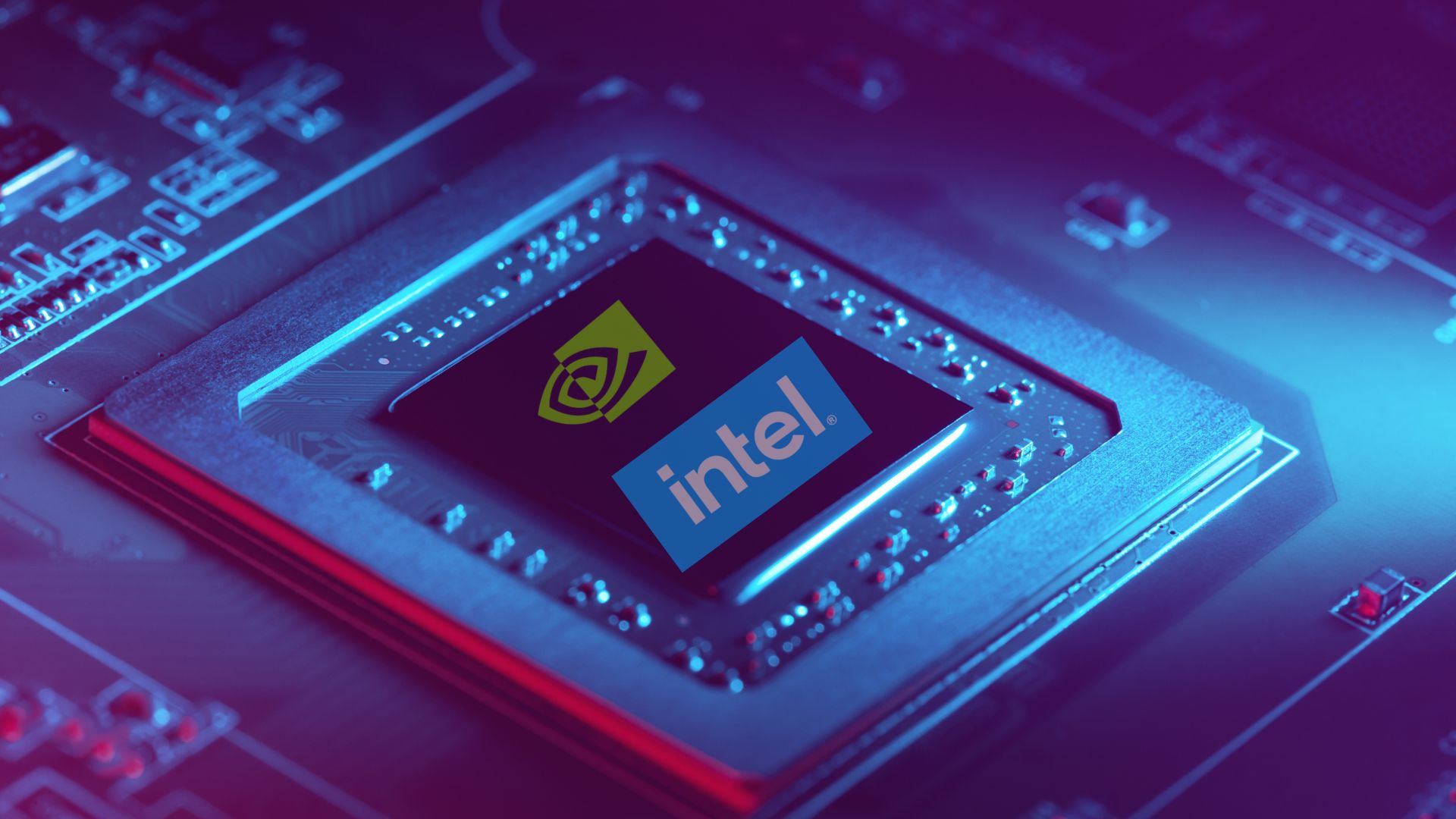
NVIDIA and Intel aren’t just shaking hands for a press photo — they’re fusing their strengths in a way that could change how PCs are built. Intel will be designing custom x86 CPUs with NVIDIA’s RTX GPU chiplets baked in, connected seamlessly through NVLink, NVIDIA’s ultra-fast interconnect. Think of it as a supercharged APU, but instead of entry-level graphics, you’re looking at desktop-class RTX power inside the CPU package.
For gamers, this isn’t some abstract data center play — this is personal computing with the potential to crush today’s bottlenecks.
Intel will be designing custom x86 CPUs with NVIDIA’s RTX GPU chiplets baked in, connected seamlessly through NVLink, NVIDIA’s ultra-fast interconnect.
Why This Matters for Gamers
The End of CPU-GPU Bottlenecks
Every gamer has felt it — the micro-stutter, the frame hitch, the lag spike when your CPU and GPU aren’t in perfect sync. By placing the GPU chiplets directly next to the CPU cores with NVLink, latency could plummet, bandwidth could soar, and frame times could become buttery smooth.
Gaming Laptops Get Supercharged
This move screams next-gen laptops. Imagine thinner machines that don’t scream like jet engines every time Cyberpunk 2077 runs. With integrated GPU chiplets, thermals can be optimized at the silicon level, potentially delivering desktop-class RTX performance in portable form factors.
The Desktop Dilemma
PC builders might face a new reality: if your GPU is part of your CPU package, what happens to upgrades? Will we still get monster cards like the RTX 5090 in PCIe slots, or is the future a hybrid, semi-upgradeable setup? This could split the community — efficiency vs freedom.
Software Synergy
NVIDIA’s ace card isn’t just hardware; it’s software. DLSS, Frame Generation, and AI-powered rendering could benefit from tighter CPU-GPU integration. Imagine system-wide shared memory pools that finally crush VRAM bottlenecks at 4K and beyond.
What About AMD?
AMD has long championed the CPU + GPU-on-one-die model with its APUs. But those were mostly about casual gaming and integrated graphics. With NVIDIA bringing RTX into the same conversation, AMD suddenly looks pressured to scale its approach — or risk losing the high-performance laptop and compact-PC narrative.
So, What’s Next?
This isn’t rolling out tomorrow. Silicon development cycles take years. But the roadmap is clear: the traditional CPU-GPU divide is shrinking. For gamers, that means:
- Faster frame pacing and smoother gameplay.
- More powerful gaming laptops without insane cooling hacks.
- A potential rethinking of desktop modularity.
We may be witnessing the first steps toward the super-APU era, where gaming PCs aren’t built around separate components, but around fused ecosystems designed for maximum efficiency.
And that’s not just an upgrade — that’s rewriting the rules.
One thing’s for sure: the next generation of gaming rigs won’t look — or play — the same again.
Final Thought
PC gaming has always been about choice, customization, and raw power. NVIDIA and Intel are now dangling something different: cohesion, integration, and efficiency. The question is — will gamers embrace this brave new future, or cling to the old ways of modular freedom?
One thing’s for sure: the next generation of gaming rigs won’t look — or play — the same again.