
If you’re among the 0.01% of users buying an M5 Pro MacBook for its raw horsepower — AI researchers training custom models, VFX artists rendering real-time 3D scenes, developers compiling massive codebases — this post isn’t for you. Go enjoy your machine guilt-free. This is for the rest of us: the everyday pros who use their MacBook for everything in between — work, content consumption, 4K editing, running local AI models, gaming on a Friday night, and listening to music while doing all of the above.
The M1 Pro was a generational leap. Everything after it… less so.
Let’s rewind to October 2021. Apple didn’t just release a new chip, they rebooted the entire MacBook Pro experience. After years of notoriously bad butterfly keyboards, throttled thermals, and the unloved Touch Bar, the M1 Pro MacBook arrived with a completely new chassis: a new form factor, a new MagSafe connector, a notched ProMotion XDR display, an HDMI port, an SD card slot, a redesigned speaker system, and yes, a chip that left Intel in the dust.
Butterfly keyboard issues, thermal throttling, limited ports, Touch Bar
New chassis, new keyboard, new display (notch, ProMotion, XDR), new speakers, MagSafe return, HDMI, SD card, Apple Silicon debut on Pro laptops
Generational leap
Same chassis. Chip upgrade, slightly better WiFi
Chip refresh
Same chassis. Hardware ray tracing added to GPU. Still the same enclosure
Chip refresh
Same chassis. Nano-texture display option, Thunderbolt 5, better camera (12MP). Incremental
Chip refresh
Same chassis. Wi-Fi 7, Bluetooth 6, faster SSD, new Fusion Architecture chip. Still the 2021 enclosure
Chip refresh
Notice the pattern? From M1 Pro to M5 Pro, the chassis has remained essentially identical for five years. The display resolution hasn’t changed. The speakers are still the same six-speaker array. The keyboard, the trackpad, the ports. You’re buying a meaningfully faster chip inside a design that, from the outside, is indistinguishable from what launched in 2021.
“The silicon might suggest different generations. But the chassis — which is more central to your daily experience — is still the same box.”
This matters more than spec sheets admit. When you use a laptop, you’re interacting with the keyboard, the display, the speakers, the hinge, the lid, the ports. The chip is doing its work invisibly. If those physical touchpoints haven’t changed since 2021, then in every tactile, perceptual sense, you’re using the same computer.
My M1 Pro still handles everything I throw at it without breaking a sweat.
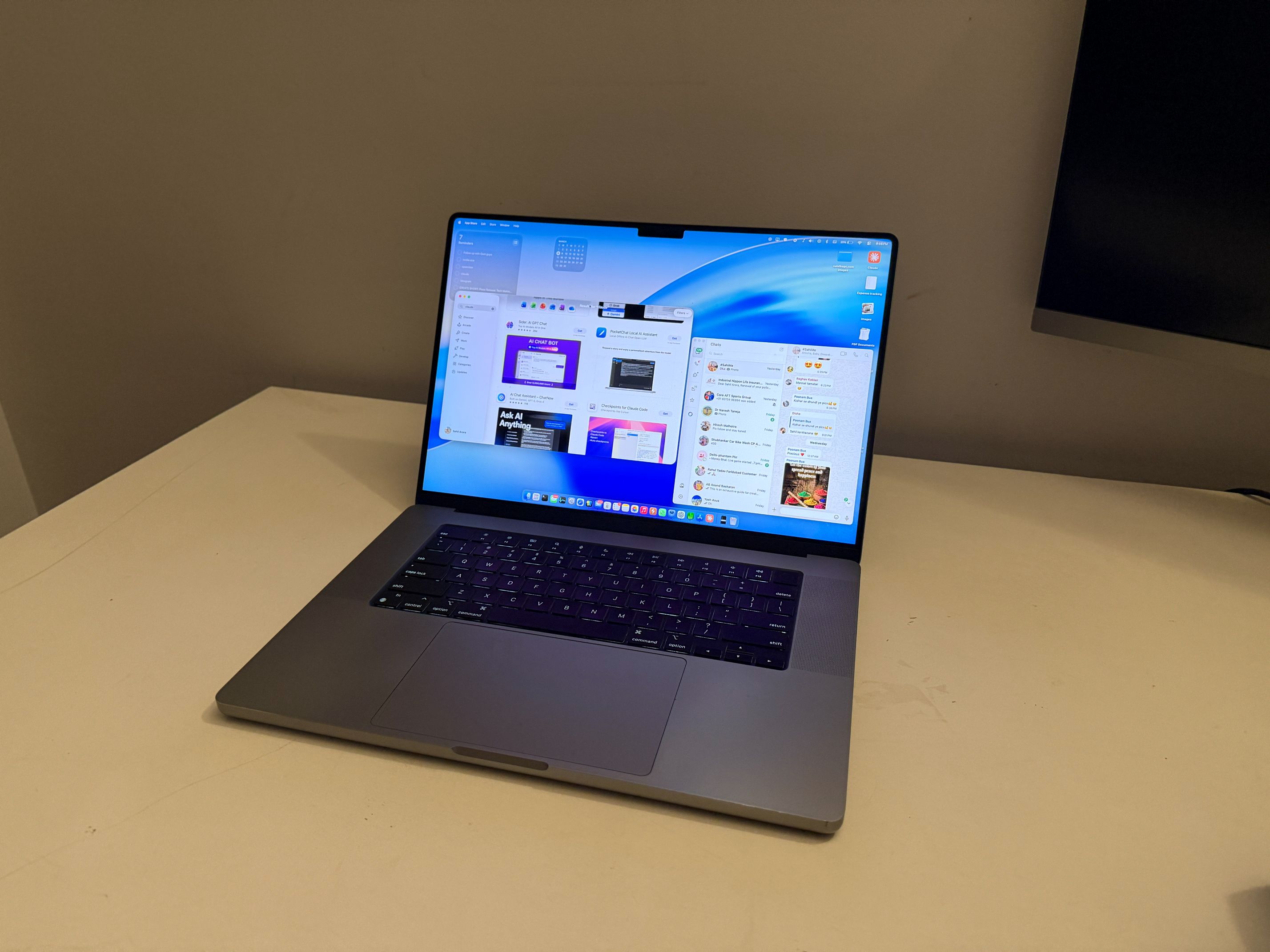
Apple’s own numbers are impressive: the M5 Pro delivers 2.5× the multithreaded CPU performance of the M1 Pro, 2.2× the GPU performance, and up to 6.9× faster LLM prompt processing. On paper, that gap is enormous. In practice, for most workflows, the M1 Pro is still nowhere near its ceiling.
Cyberpunk 2077 runs, and if you’re curious how the MacBook Pro 16 stacks up against dedicated gaming hardware, the gap is smaller than you’d expect. 4K timelines scrub in DaVinci Resolve. Local models load and respond. The speakers fill a room, that too without distortion, with detail, and with a good amount of bass. Everything that matters to my day-to-day is covered, and the machine still feels fast. The M1 Pro’s 16-core GPU and 200 GB/s memory bandwidth were built for exactly these workloads, and they hold up.
When would an upgrade actually make sense?
Performance upgrades only matter when you’ve hit a ceiling. I haven’t. And most people buying a MacBook Pro for “everything in between” work won’t either. The M5 Pro is genuinely remarkable – but remarkable for who?
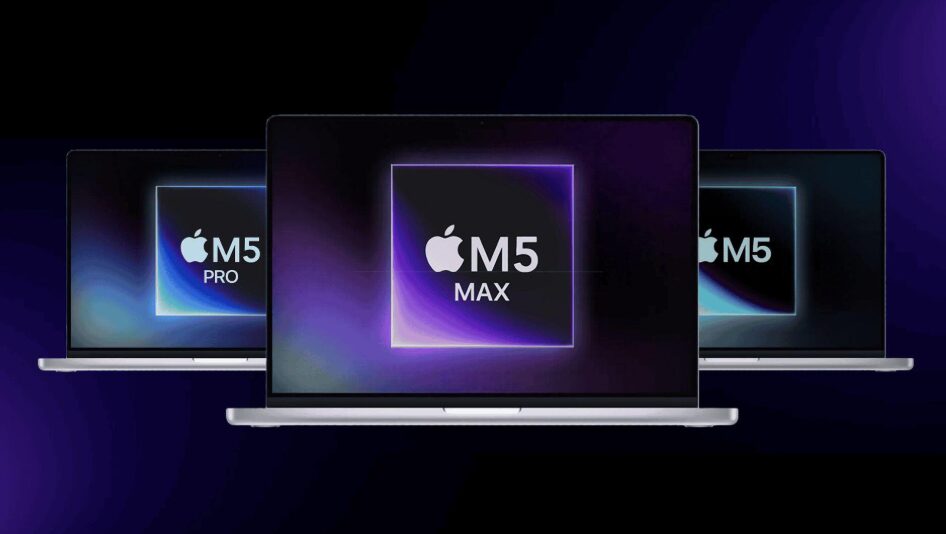
The upgrade I’m actually waiting for is real – and it’s coming later this year.
Here’s what changes my calculus entirely: the MacBook Pro hasn’t had a true redesign since 2021. Five years is a long time. And for the first time in that stretch, a genuinely new machine appears to be around the corner.
The MacBook Pro (or MacBook Ultra?) gets its first real redesign in five years
Bloomberg’s Mark Gurman, analyst Ming-Chi Kuo, and supply chain reports from Samsung Display all point to the same conclusion: Apple is preparing a ground-up redesign of its pro laptop lineup for late 2026, potentially calling it “MacBook Ultra.”
- Tandem OLED display — the same tech as the iPad Pro, bringing true blacks, wider colour, and higher contrast
- Touchscreen support — a first for any Mac, with macOS updated for pinch, tap, and gesture input
- Dynamic Island replacing the notch just like iPhone, interactive and context-aware
- M6 Pro and M6 Max chips built on TSMC’s 2nm process, the next architectural generation
- Thinner and lighter chassis — reinforced hinge designed for touch interaction
- Wi-Fi 7 (already on M5 Pro) and possibly 5G cellular modem
- Hole-punch camera, no notch
This is what a generational leap looks like. Not a new chip in the same box – a new display technology (the jump from mini-LED to OLED is comparable to going from LCD to Retina), a new form factor, a new interaction paradigm. The kind of thing where, if you pick up the 2026 machine and the 2021 machine side by side, you know instantly which one is newer.
Samsung has already started producing 8.6-generation OLED panels specifically for this machine. Gurman expects a Q4 2026 launch. That’s potentially just months away, and if the naming shifts to “MacBook Ultra,” it could sit above the current MacBook Pro line rather than replace it, which would make it the clearest statement Apple has made about pro laptops since, well, 2021.
The upgrade cycle logic becomes obvious: why spend on a chip refresh today when the first genuine redesign in half a decade is this close?
The bottom line
The M5 Pro MacBook Pro is a genuinely excellent machine. The Fusion Architecture chip, the Wi-Fi 7, the faster SSD, these are real improvements. If you’re coming from an Intel MacBook or an M1 Air, buy it today without hesitation. If you need the maximum local AI performance available in a laptop right now, same answer, and there’s plenty you can do to squeeze every bit of performance out of that M5 chip.
But if you’re sitting on an M1 Pro that’s still doing everything you need it to: gaming, 4K editing, running models, watching movies, making music, the honest answer is: wait. Not because the M5 Pro isn’t worth it, but because what’s coming next actually deserves the “new computer” feeling that five years of chip refreshes have quietly failed to deliver.
The chassis is the computer. And that chassis is finally changing.
Written in April 2026, still on an M1 Pro that hasn’t given me a single reason to leave.
Have a different take? Upgraded from M1 Pro and noticed a real-world difference? I’d genuinely love to know.