
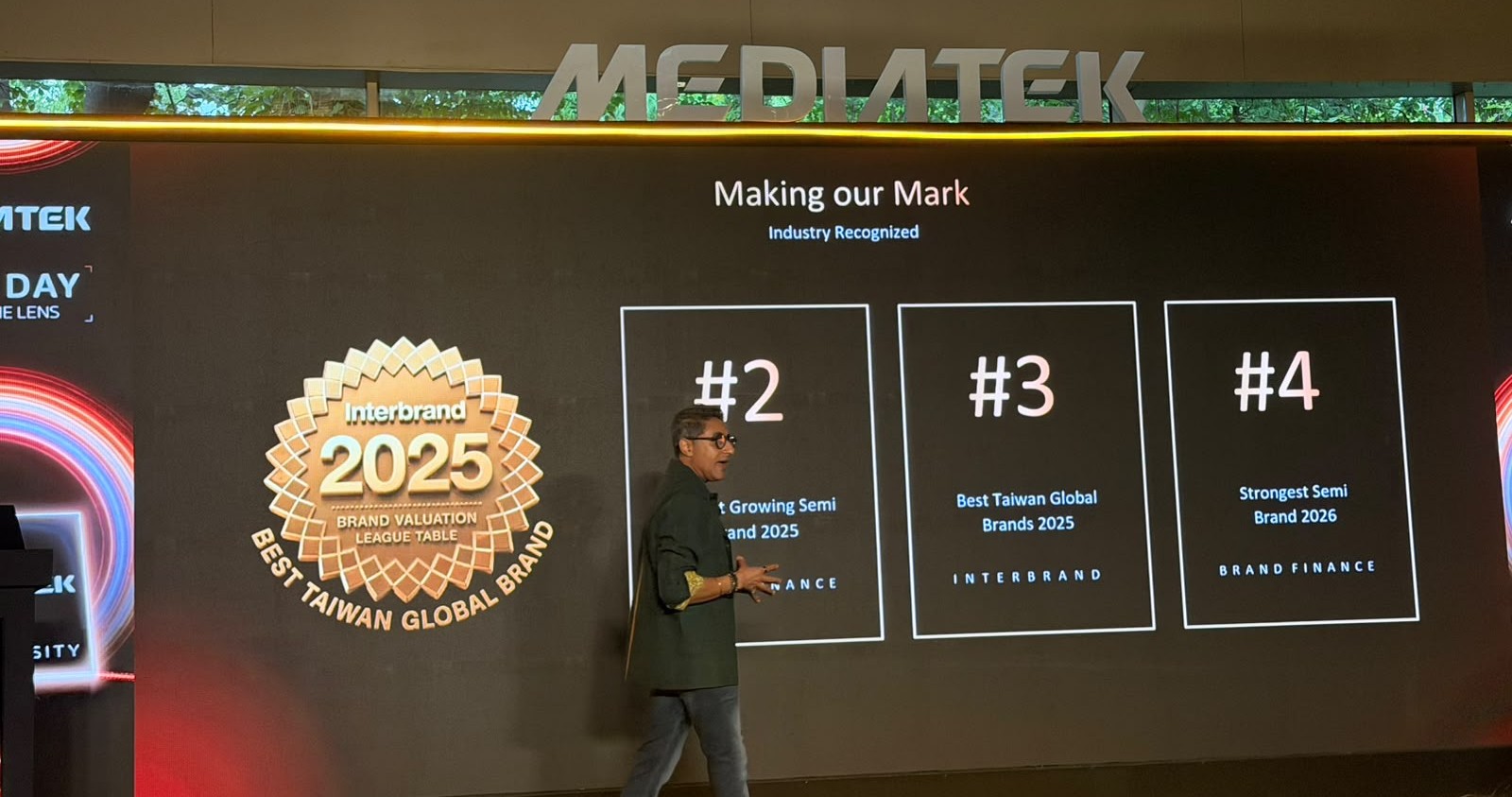
MediaTek brought its flagship Tech Day to New Delhi on 18 July, and this year the company pointed the spotlight squarely at the one smartphone feature people argue about most: the camera. Titled “Beyond the Lens,” the event was built around the imaging technology that MediaTek’s chips make possible, while also reinforcing the broader “One MediaTek” vision that now stretches across automotive, data centres, AI PCs, and other connected platforms well beyond the phone.
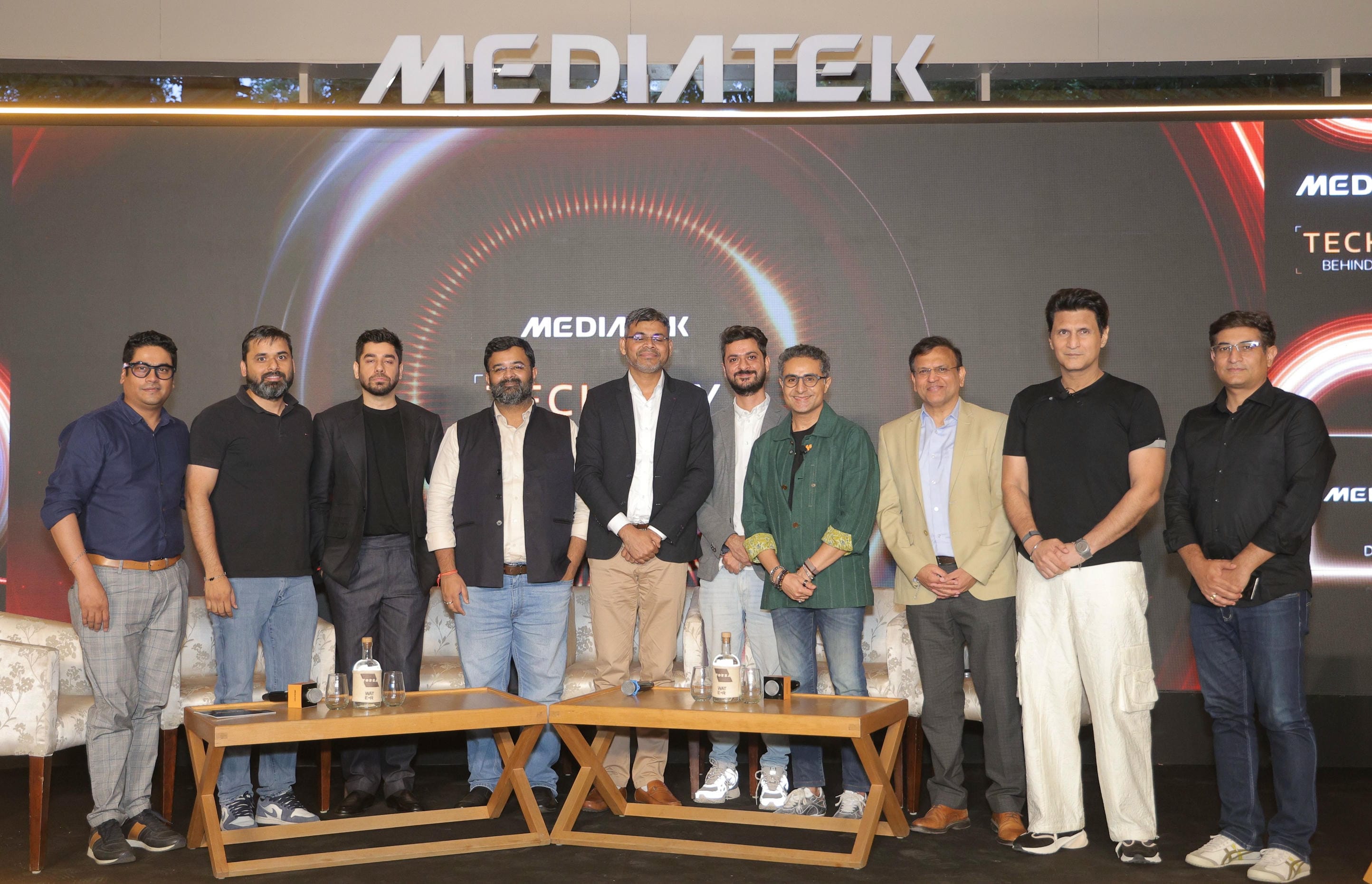
MediaTek, which describes itself as the world’s leading fabless semiconductor company and powers nearly two billion connected devices a year, used the Delhi event to gather a wide cross-section of the industry. Media, analysts, professional photographers, content creators, and OEM stakeholders from vivo, Motorola, and Xiaomi all took part in discussions on where mobile imaging goes next. The company’s India leadership was out in force too, with Anuj Sidharth, Director of Marketing and Corporate Communications for India and SEA, leading the imaging showcase, alongside Anku Jain, Managing Director of MediaTek India.
It was also a strong moment for the company’s standing in the country. MediaTek confirmed it remains the number one smartphone chipset brand in India with a 49% market share in Q2 2026, a position it has now held for 24 consecutive quarters.
The Star of the Show: The AI-ISP
The centre of gravity at Beyond the Lens was the AI-ISP, the image signal processor now baked into MediaTek’s latest Dimensity chips. This is the part of the SoC that takes the raw data pouring off the camera sensor and turns it into a finished photo. Speaking at the event, Sidharth highlighted two breakthrough capabilities in particular: 18EV HDR Fusion and 4K120 Super EIS.
The first, 18EV HDR Fusion, is about dynamic range, the span between the brightest and darkest parts of a scene a camera can capture without blowing out highlights or crushing shadows. Eighteen exposure values is an enormous window, approaching what the human eye itself perceives, and it’s exactly what you want when shooting something tricky like a backlit portrait or a sunset with detail still visible in the foreground. The second, 4K120 Super EIS, is an electronic image stabilisation system for smooth, cinematic video even at a demanding 4K resolution and 120 frames per second. Between them, they target the two things people most often get wrong on a phone: high-contrast photos and shaky video.
Sidharth’s framing on the sidelines of the event was that smartphone photography continues to shape what consumers expect, and that with the Dimensity 9500 flagship SoC and the Dimensity 8500 premium SoC, MediaTek is meeting that demand directly. The key, he noted, is that these next-generation AI-ISPs elevate computational photography without compromising on power efficiency. He described MediaTek’s guiding belief as one where great technology is about delivering experiences that positively affect people’s lives, not simply shipping products, and framed the imaging work as helping users capture moments with more clarity, creativity, and intelligence.
What the AI-ISP brings to the photo
Why “Without Compromising Power” Is the Whole Game
That phrase, “without compromising on power efficiency,” is easy to skim past, but it’s actually the hardest part of the entire challenge. Anyone can throw more processing at a photo. Doing it without draining the battery or heating the phone until it throttles is where the real engineering lives.
It’s also a philosophy I heard Sidharth articulate clearly in a longer conversation we had earlier this year, when the topic was gaming rather than cameras. He described how gaming technology has moved away from chasing peak benchmark numbers toward delivering consistent, real-world experiences, with players increasingly focused on performance per watt and sustained frame rates over long sessions rather than short bursts of peak output. Swap gamers for photographers and frame rates for shots, and the logic holds up exactly. It’s the same design instinct applied to a different problem, and seeing it surface again at Beyond the Lens suggests the imaging push is part of a coherent way of thinking rather than a standalone marketing beat.
The Phones on the Floor
MediaTek set up dedicated experience zones where attendees could try the imaging technology on real, shipping devices rather than reference boards. What stood out was the breadth of OEM support, spanning flagship and premium tiers across four different brands.
| Device | MediaTek Chip | Tier |
|---|---|---|
| vivo X300 Pro | Dimensity 9500 | Flagship |
| OPPO Find X9s | Dimensity 9500s | Flagship |
| Motorola Edge 70 Pro | Dimensity 8500 | Premium |
| Xiaomi 17T | Dimensity 8500 | Premium |
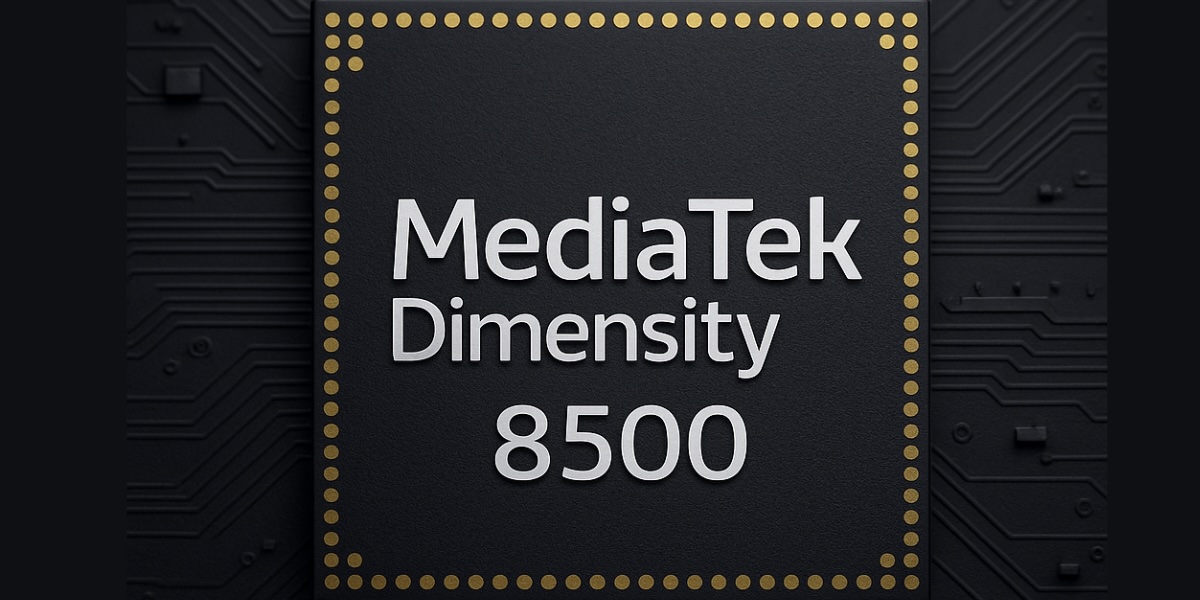
Getting brands like vivo, OPPO, Motorola, and Xiaomi to build around your imaging pipeline at the same time is not a small thing. It means the camera experience MediaTek designs at the silicon level reaches buyers across a wide range of prices, from true flagships down into the more accessible premium segment. That reach is the quiet advantage of being the market leader.
“Who Really Takes the Photo?”
The most enjoyable part of the day was a panel discussion with a genuinely good question for its title: “Who Really Takes the Photo?” It was moderated by veteran tech journalist Rajiv Makhni and brought together a strong mix of voices: professional photographer Rahul Jhangiani; Anuj Sidharth from MediaTek; Paigham Danish, CTO and Head of Product and GTM at vivo India; Gautam Batra, Associate Director of Product Marketing at Xiaomi India; and Shivam Ranjan, Marketing Director for APAC at Motorola Mobility.
The debate was the eternal one: is a great photo down to the chip, the camera hardware, or the person holding the phone? The answer the panel arrived at was that it’s all three working together. The human brings the eye and the moment, the sensor gathers the light, and the ISP is the invisible hand doing thousands of calculations in the instant between you pressing the shutter and the image appearing. It was a smart framing, because it put MediaTek’s contribution in proper context. The chip doesn’t replace the photographer. It makes sure the photographer’s good instinct actually survives the journey to a finished image.
One MediaTek: The Bigger Picture
Imaging was the headline, but the event also used the moment to reinforce the wider “One MediaTek” story, the company’s push to present itself as a single, unified technology brand stretching well beyond phones. The clearest expression of this is a tidy new naming structure that MediaTek outlined on the day: Dimensity for smartphones, Dimensity AX for automotive, and Dimensity CX for compute platforms such as AI PCs.
The company also walked through its latest roadmap, spotlighting the flagship and premium Dimensity 9500s, Dimensity 9500, and Dimensity 8500 chipsets, which it positions as delivering leadership across AI, imaging, gaming, connectivity, and power efficiency. The automotive figures alone show how serious the expansion has become, with MediaTek citing more than 20 partnerships with global automakers and over 190 ongoing projects under the Dimensity AX platform. Add to that its growing focus on AI compute platforms, and the picture is of a company scaling confidently across categories.
That expansion is visible on the ground in India too. MediaTek’s silicon already sits across a growing range of everyday devices. Some of the most sensible value tablets I’ve reviewed run on Dimensity chips, from the stylus-toting Lenovo Idea Tab Plus to the more capable Idea Tab Pro. The company’s connectivity credentials run deep as well, something we explored when we looked at MediaTek India’s role in the 5G rollout.
The Takeaway
MediaTek frames its Technology Day as an interactive platform to show off the innovations reshaping everyday life, and Beyond the Lens lived up to that billing. The imaging technology is genuinely impressive, the OEM support behind it is broad, and the growth story, now 49% share across 24 quarters, speaks for itself. Watching MediaTek evolve from the “affordable chip” label of a few years ago into a company shaping flagship camera experiences and expanding across cars, PCs, and data centres has been one of the more interesting arcs in consumer tech.
The next time you take a photo you’re proud of on a Dimensity-powered phone, there’s a good chance the AI-ISP did quiet, clever work you never noticed. On the evidence of Beyond the Lens, that invisible work is only going to get better.